Author: Cinema Explained Editorial

  • Why Heat is the Greatest Crime Film Ever Made

    Why Heat is the Greatest Crime Film Ever Made

    In the realm of crime cinema, some films entertain, films enlighten, and then some films etch their way into our consciousness, forever changing the way we perceive the genre. “Heat”, directed by Michael Mann and released in 1995, is one such film. It’s not just a movie, it’s a masterclass in filmmaking, a symphony of intense performances, meticulous research, and breathtaking action sequences. This film is an epic battle between two formidable opponents, each at the pinnacle of their game, each recognizing and respecting the other’s skill and determination. It’s a relentless pursuit and strategic evasion, a violent chess game unfolding on the vast stage of Los Angeles. In this article, we delve into the reasons why “Heat” stands as an unparalleled achievement in crime cinema, a film that continues to thrill and captivate audiences even decades after its release.

    1. Documentary Factor: Real-Life Inspiration

    “Heat” is more than just a work of fiction; it’s a film that draws its essence from the gritty reality of life. The central characters, Neil McCauley (Robert De Niro) and Vincent Hanna (Al Pacino) are not mere figments of imagination but are inspired by real individuals engaged in a high-stakes conflict.

    Neil McCauley, a seasoned criminal who had spent a significant part of his life behind bars, was the mastermind behind a series of heists in Chicago in the 1960s. His life of crime culminated in a dramatic street shootout with the police, which led to his death. McCauley’s life was marked by long stints in state and federal penitentiaries, including a grueling eight-year term at Alcatraz.
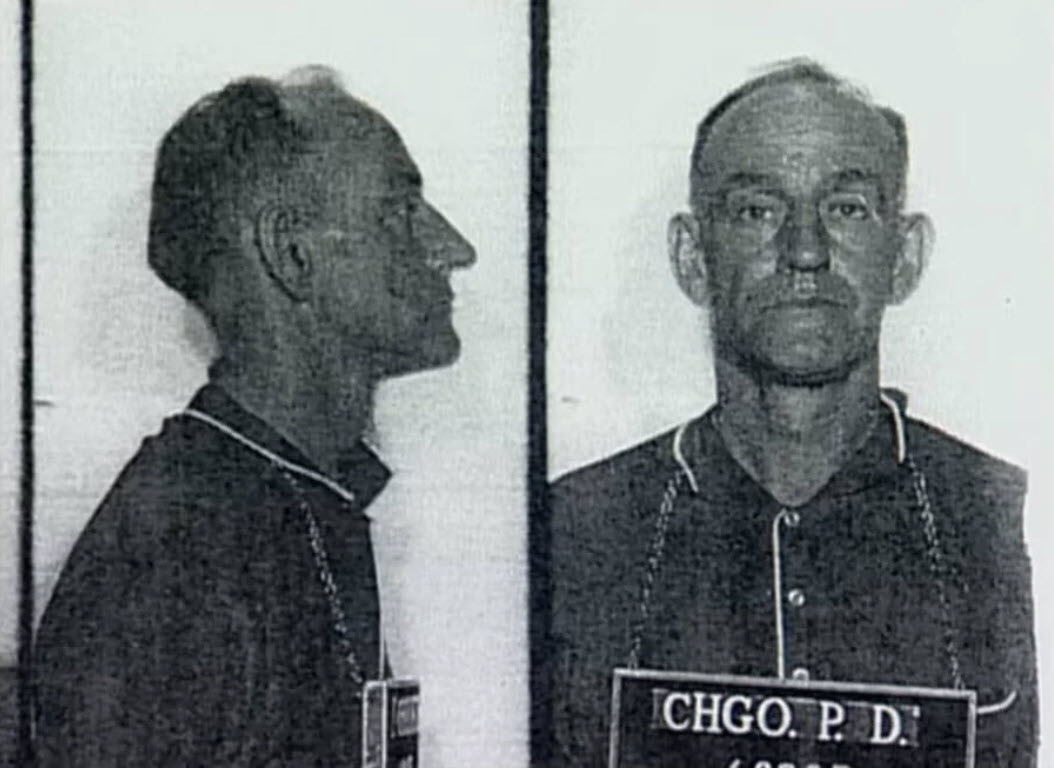
    Neil McCauley’s mugshot from 1964

    On the other side of the law was Chuck Adamson, a Chicago detective who was ready to take down McCauley. Adamson had even infiltrated McCauley’s gang after a casual coffee meeting, setting the stage for a showdown. While “Heat” is not a meticulous recreation of the story of Neil and Chuck, it captures the essence of their conflict. Director Michael Mann, while changing the facts for the purpose of the narrative, was able to portray the true nature of their intense and deadly confrontation. This adherence to the spirit of the real-life narrative lends an unparalleled layer of authenticity to “Heat”, setting it apart from other crime films. But the influence of “Heat” extends beyond the realm of cinema. Some of the film’s most iconic sequences have reportedly inspired real-life crimes, including armored car robberies in South Africa, Denmark, and Columbia.

    The seamless blend of fact and fiction, the painstaking research contribute to the documentary factor that makes “Heat” a standout in the crime film genre.

    2. Cast and Characters

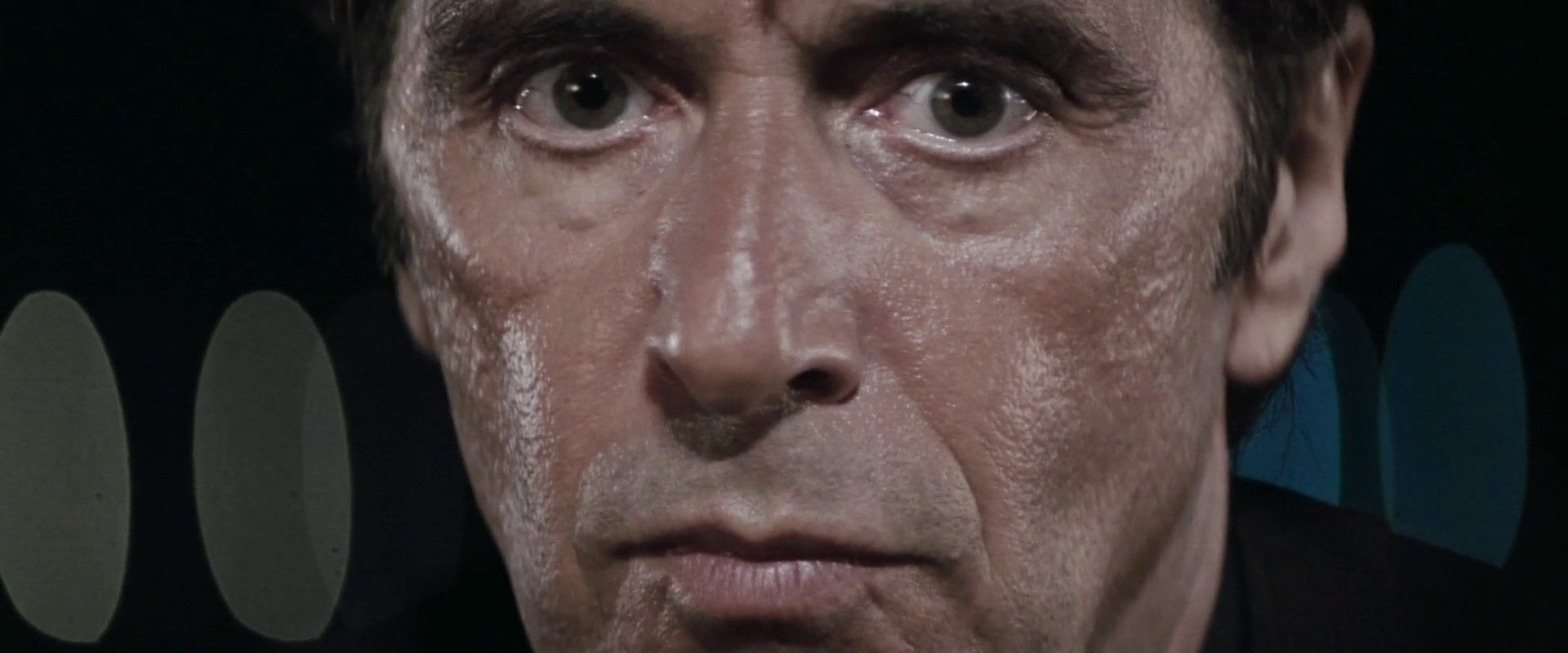
    “Heat” features a powerhouse cast led by Robert De Niro and Al Pacino. De Niro’s Neil McCauley is a seasoned criminal, portrayed with a quiet intensity that’s as intriguing as it is formidable. Pacino’s Vincent Hanna is a dedicated detective, brought to life with relentless energy and determination. Indeed, Pacino’s portrayal of Detective Vincent Hanna in “Heat” is multi-faceted and compelling. His interpretation of the character as someone under the influence of cocaine throughout the film provides a unique key to view his intense performance. The chance to play adversaries in a crime drama directed by Michael Mann was an opportunity that both Pacino and De Niro found irresistible.

    Initially, the script was presented to De Niro. Recognizing Pacino as the perfect fit for the role of Hanna, De Niro acted on his instinct and shared the script with Pacino. This decision set the stage for one of the most memorable performances in crime film history. The film is so immersive that you may forget that the iconic coffee shop scene is the only scene these two actors share together before the final culmination.
    “Heat” dir. Michael Mann – still frame

    3. Epic Scenes:

    “Heat” is not just a film; it’s an experience, largely due to its epic production value. The film’s action sequences are meticulously crafted, each one a testament to the scale and ambition of the project. 

    The Safe Truck Heist:

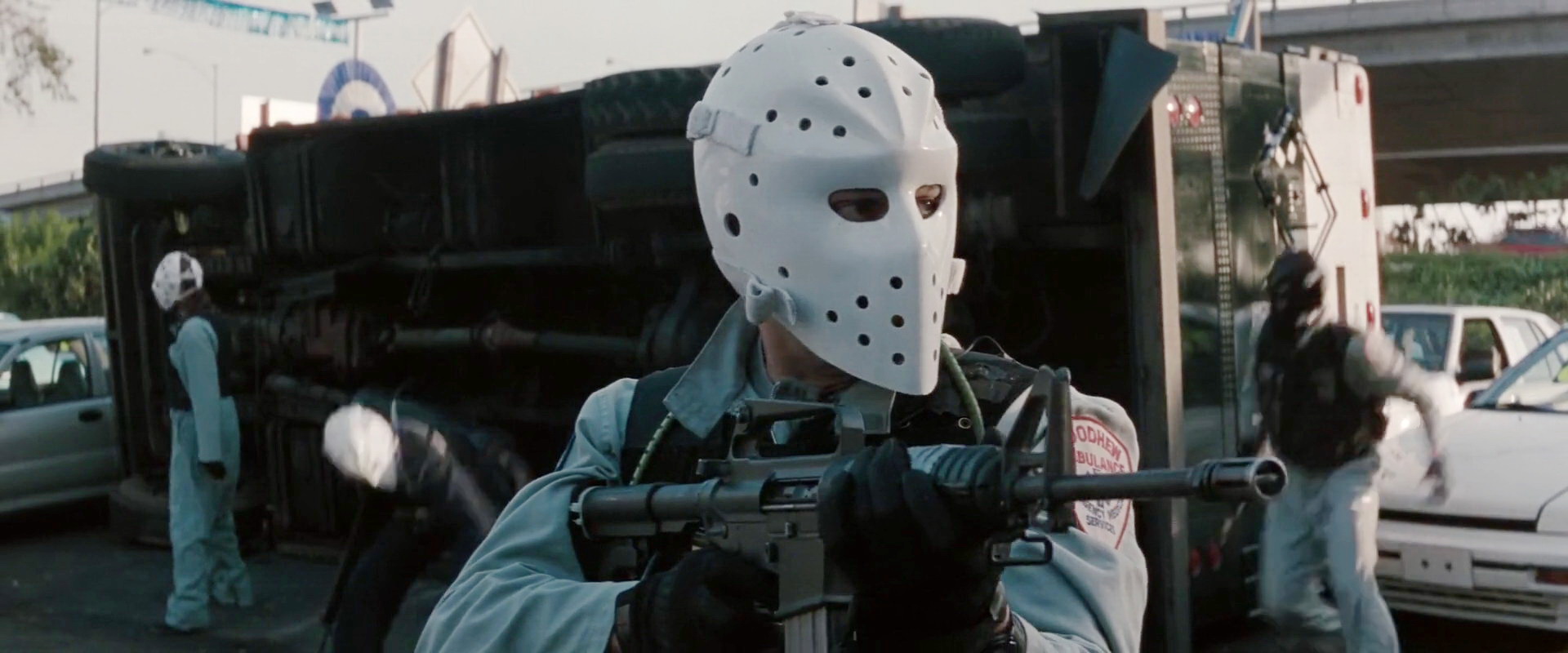
    The film opens with a high-stakes heist of an armored truck. This scene sets the tone for the rest of the film, introducing us to the professional and ruthless efficiency of Neil McCauley’s crew. The scene is intense and meticulously planned, demonstrating the crew’s skill and precision. 
    “Heat” dir. Michael Mann – still frame

    The Bank Heist Scene:

    Perhaps one of the most iconic scenes in the film is the bank heist. The crew, led by McCauley, attempts to rob a bank in broad daylight, leading to a tense standoff with the police. The scene is renowned for its masterful cinematography, with key moments of the heist accentuated by low-angle shots, emphasizing the power and dominance of the robbers. 

    The Getaway Scene:

    The getaway scene following the bank heist is equally memorable. The crew’s escape through downtown LA is a high-octane chase that keeps viewers on the edge of their seats. The production team managed to close downtown LA for the filming of this scene, a feat that speaks volumes about the scale and ambition of the project. Shutting down downtown LA for a film wouldn’t be possible today.
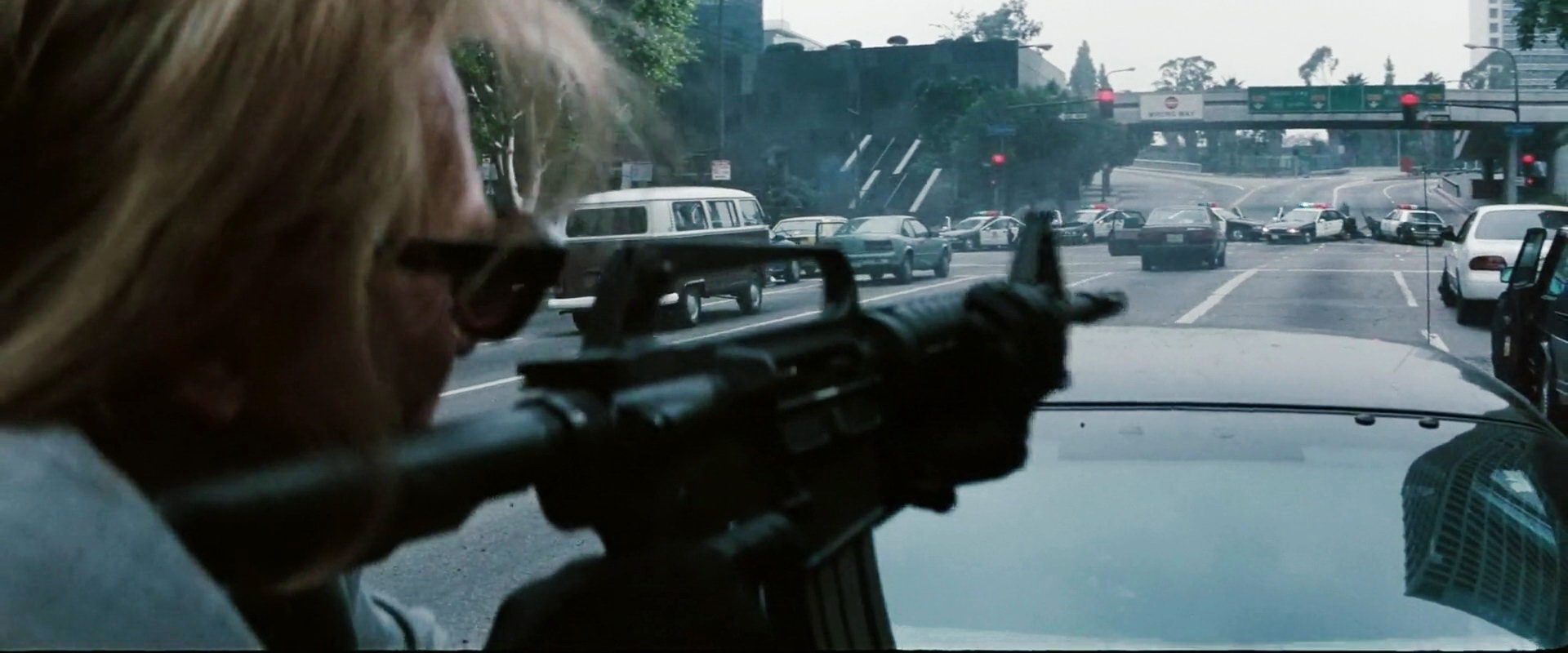
    “Heat” dir. Michael Mann – still frame

    4. City as one of the characters in the film

    “Heat” was filmed almost entirely on location in Los Angeles, using 95 locations in 107 days. Here are some of the notable landmarks featured in the film:

    Kate Mantilini: This was the restaurant where De Niro and Pacino famously shared their only scene together before the final culmination. Unfortunately, it closed its doors in 2014.
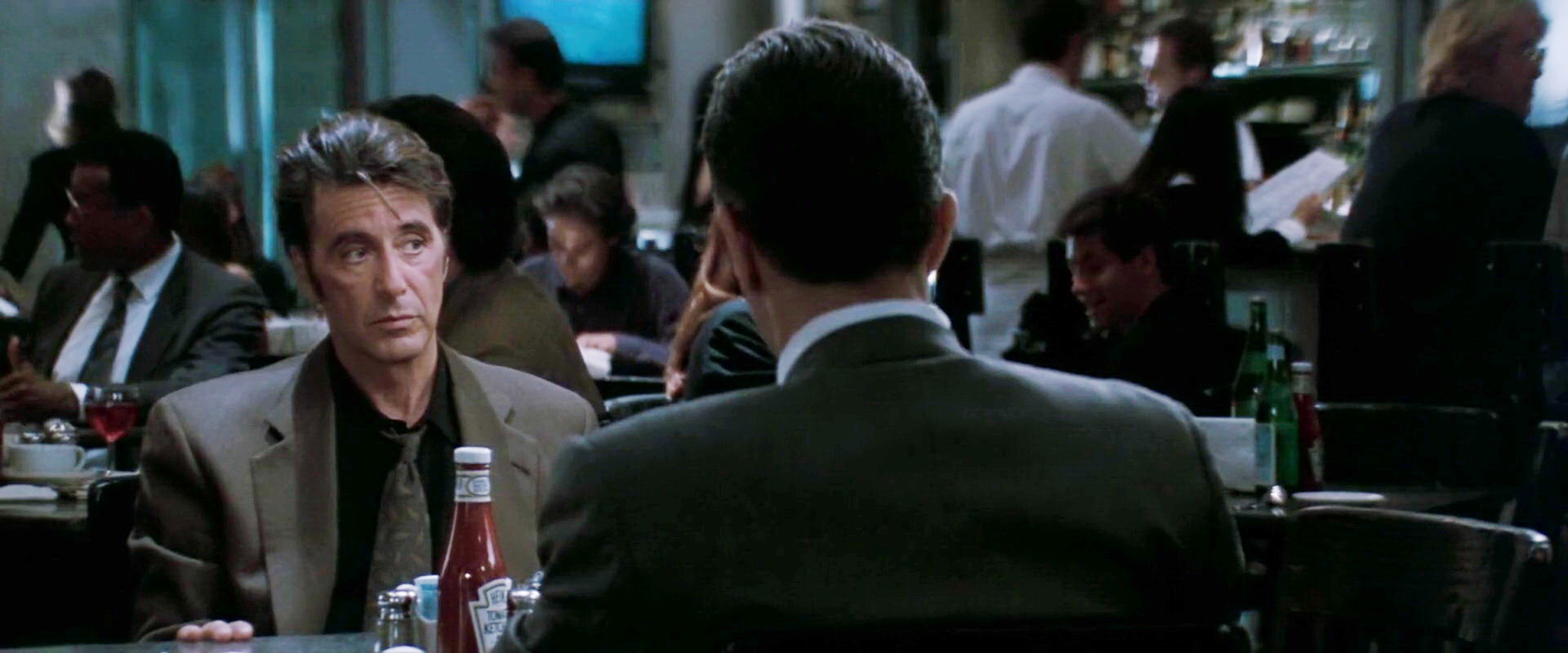
    “Heat” dir. Michael Mann – still frame

    El Cielito: This little Mexican restaurant is seen right before the armored truck robbery. It was located by the intersection at South Western Avenue and West Pico Boulevard, just north of the Santa Monica Freeway.

    Venice Boulevard: The first robbery, where De Niro and Val Kilmer’s crew ambush an armored truck in broad daylight, takes place on Venice Boulevard, west of Downtown.

    Trejo’s House: One of the more remarkable locations was Trejo’s pad in east LA, in the City Terrace area south of the San Bernardino Freeway.
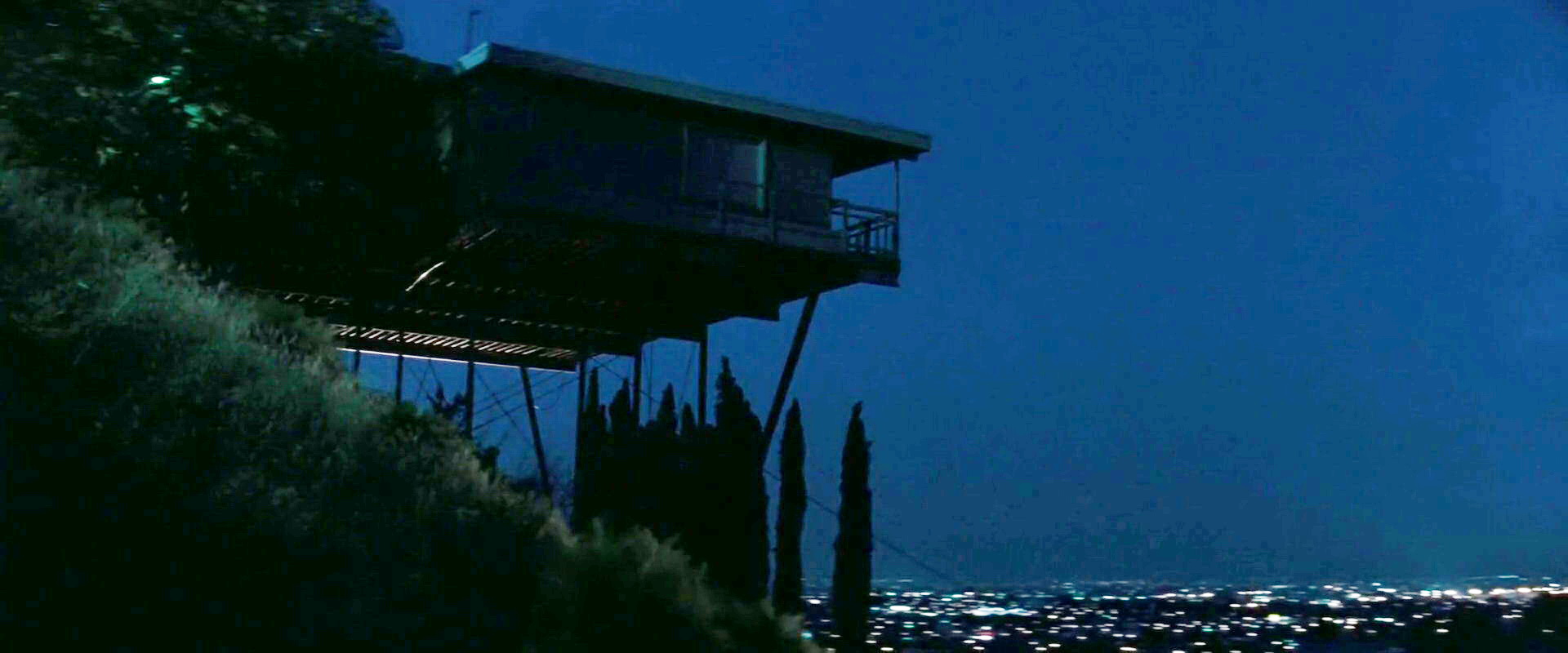
    “Heat” dir. Michael Mann – still frame

    In an era where computer-generated imagery (CGI) is commonplace, “Heat” stands out for its commitment to realism. The decision to film on location in downtown LA adds a layer of authenticity.

    The film’s meticulous attention to detail is evident in every frame. From the choice of filming locations to the inclusion of minute details like a dead crow in a swimming pool, “Heat” showcases a level of detail that breathes life into the city of Los Angeles, making it a character in its own right.

    5. The Evolution of Michael Mann: From “Miami Vice” to “Heat”

    Masterpieces like “Heat” don’t just materialize out of thin air. The unique style and psychological depth of the characters were initially shaped in “Miami Vice” – a crime series produced in the ’80s by Michael Mann. The flamboyant style of “Miami Vice” was more playful than gritty, encapsulating the mood of the ’80s with its pastel colors, fast cars, and pulsating music.

    In “Heat”, Michael Mann introduced a more complex character with a greater emphasis on his personal life. Vincent Hanna from “Heat” grapples with the chaos in his own life, including his wife’s infidelity and his stepdaughter’s mental health issues. This complexity and depth of character can be paralleled with Sonny Crockett’s personal life, who is a widower with one child, a son named Billy, from his first marriage that ended in divorce. By comparing the narratives of these characters, it’s safe to say that Sonny Crockett from “Miami Vice” served as a precursor for Vincent Hanna.
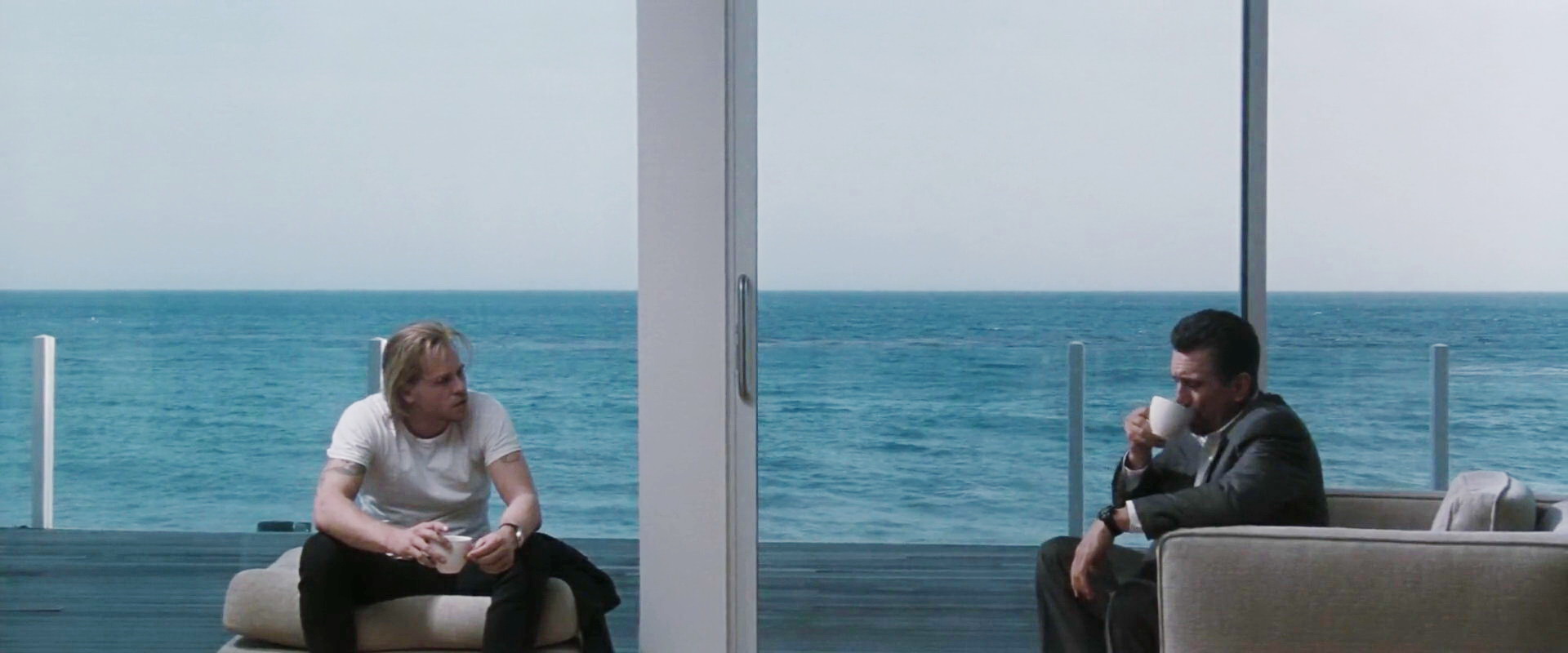
    “Heat” dir. Michael Mann – still frame

    6. Insights from a Wealth of Production Materials

    Most importantly, “Heat” offers us an abundance of production materials, released by the studios and creators. These resources enable us to study the screenplay, examine the storyboards, and most notably, listen to Michael Mann’s commentary during the film. Available as an additional audio layer on the DVD version of the film, this commentary provides a unique window into the creator’s mind.
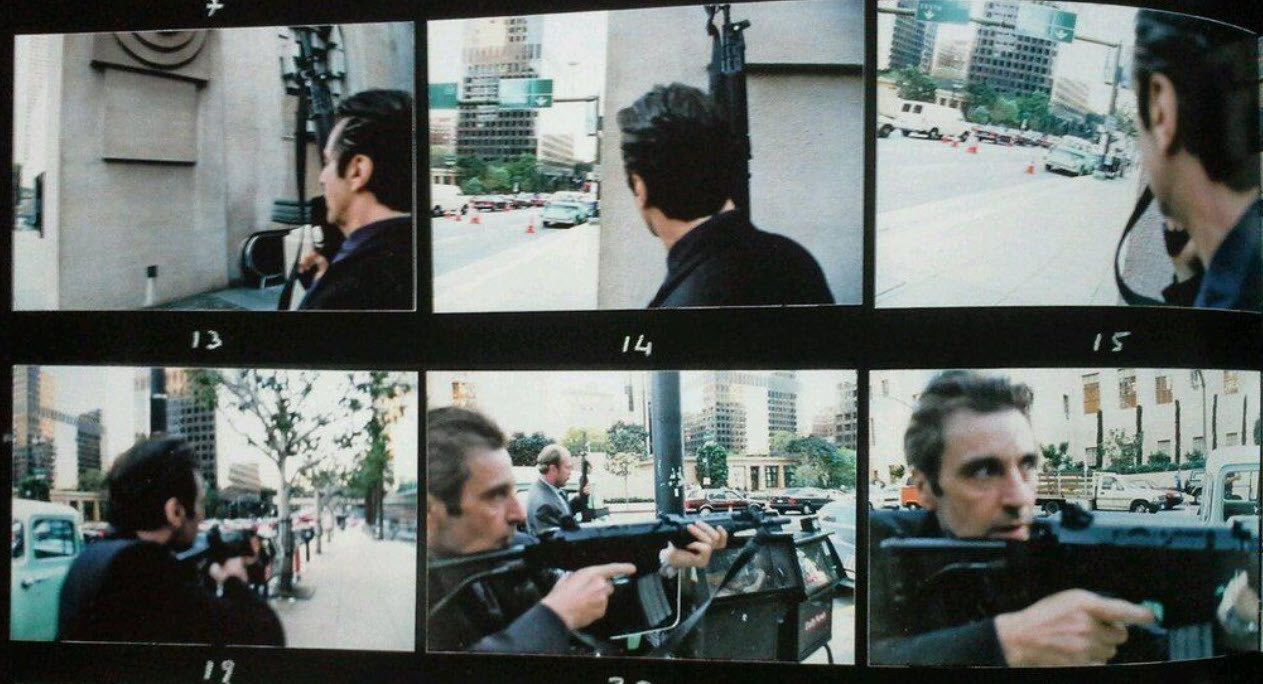
    Photo-storyboard by Michael Mann
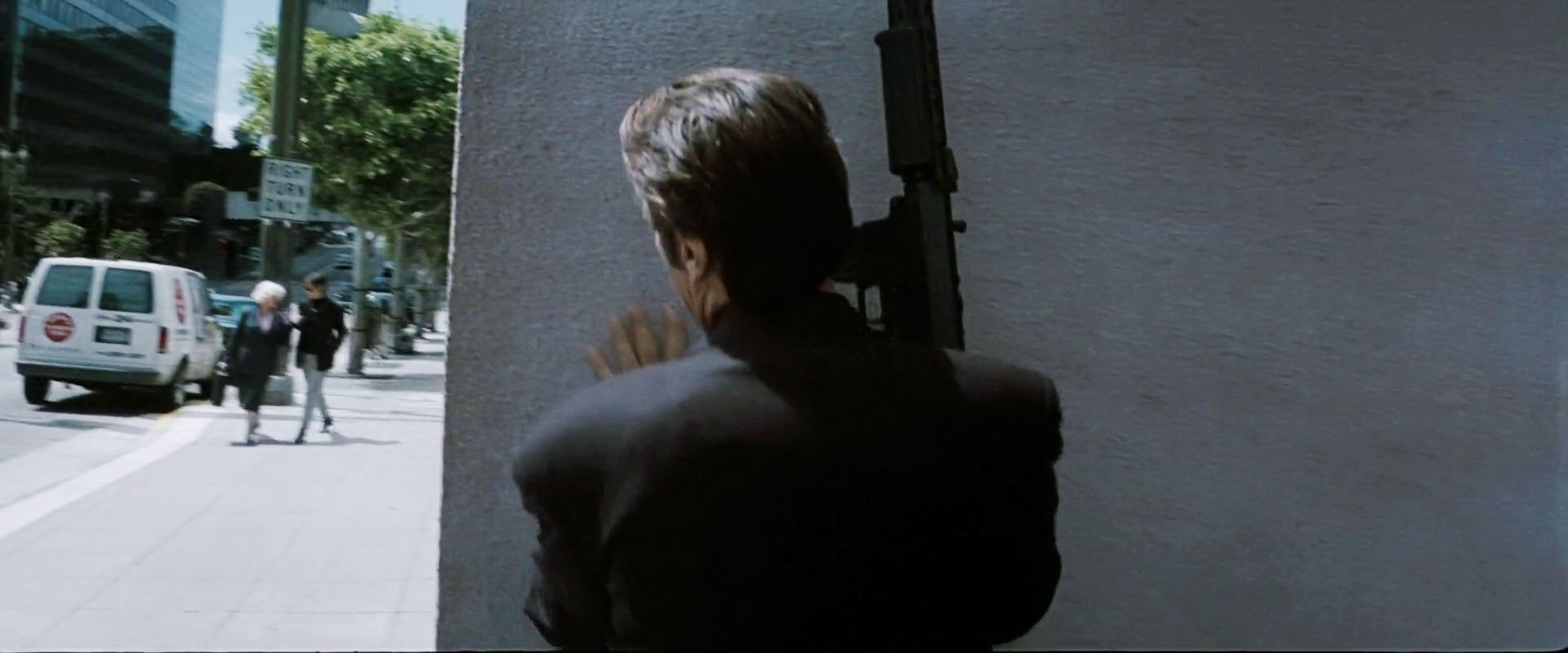
    “Heat” dir. Michael Mann – still frame

    While this aspect may not directly relate to the film’s quality per se, it holds significant value for academics and film directing students. The release of these materials presents a rich opportunity for learning and understanding the intricacies of filmmaking.
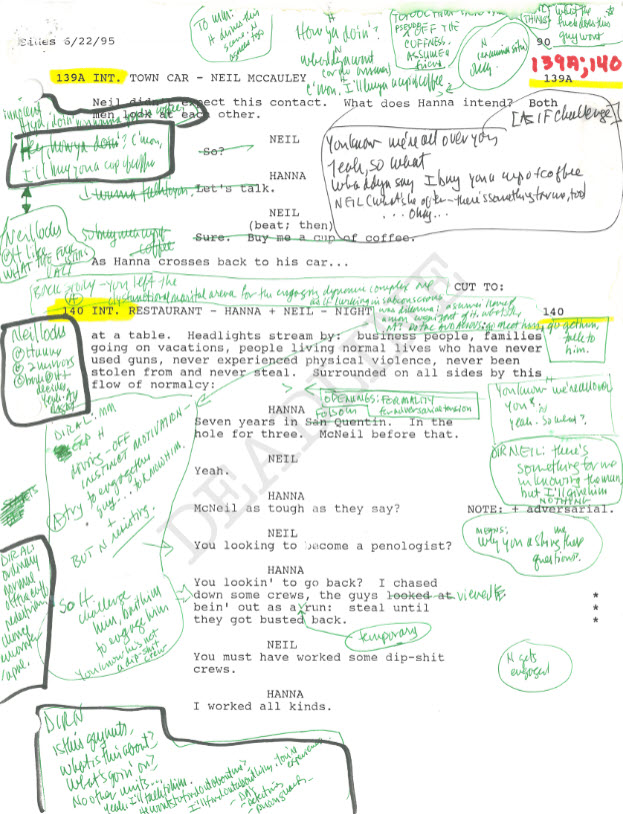
    Page from the screenplay of “Heat” with Michael Mann notes- still frame

    7. Influence on Pop Culture

    The influence of the film “Heat” extends beyond cinema and into the realm of video games. The popular game “Grand Theft Auto V” (GTA V) is heavily influenced by the atmosphere of “Heat”. This influence is evident in everything from the game’s music to its mission structure, where the echoes of “Heat” are unmistakable. Even specific locations from the film, such as the house of a character named Trejo, are featured in GTA V. In a memorable mission, the character Michael demolishes “Trejo’s” house with his truck when his wife’s lover takes refuge there. This is a humorous nod to the audience, acknowledging the game’s cinematic inspiration.
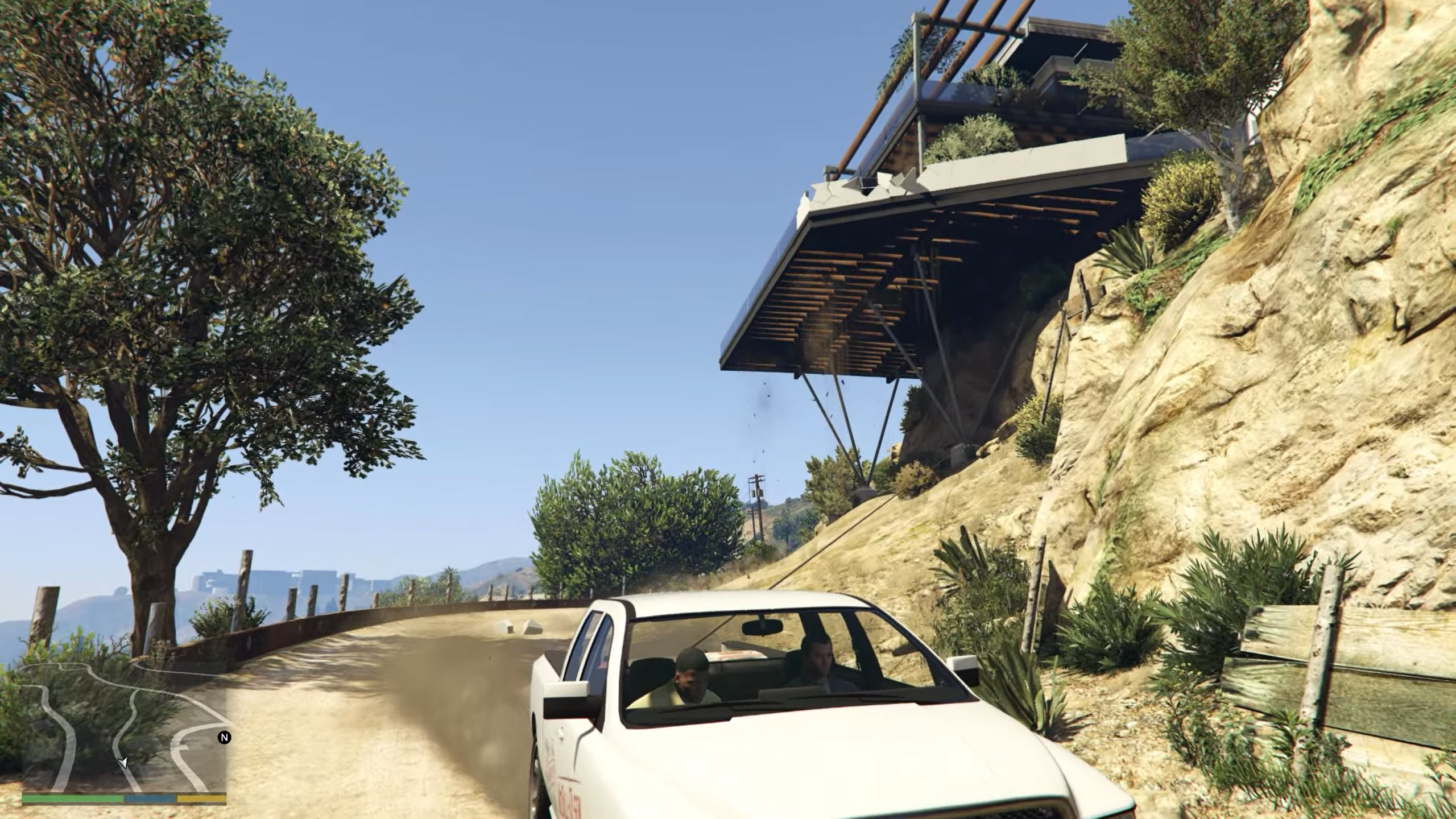
    Screenshot from the game “GTA V”

    “Heat” has undeniably left an indelible mark on the genre of crime films. One notable example is the series “True Detective”. The broken personal lives and intricate character development seen in the series might not have been possible without the path paved by Michael Mann in “Heat”.

    In these ways, “Heat” has forever changed the landscape of crime films and even influenced other forms of media. Its legacy continues to be felt, demonstrating the enduring power of Mann’s masterpiece. It’s not just a film; it’s a cultural phenomenon that has shaped our understanding and expectations of what a crime film can be.

    Sources:

    1. Heat (1995) – Armored Truck Robbery Scene (1440p) – YouTube 

    2. HEAT (1995) | Truck Robbery HD – YouTube 

    3. “Heat” – Bank Robbery Scene HD – YouTube 

    4. Heat (1995) Full Bank Robbery Shootout HD Scene – YouTube 

    5. The cinematography that made one of the most iconic bank heist scene in … 

    6. Heat Getaway Scene – YouTube 

    7. Heat (1995) – Chris Shiherlis getting away doesn’t really make sense. 

    8. Heat (1995 film) – Wikipedia 

    9. The Three Heists of Michael Mann’s Heat (1995) – ptsnob.com 

    10. The Real-Life Bank Robbery That Inspired Heat – IMDb 

    11. Heat (1995) – IMDb 

    12. HEAT (1995): A Cinema Scholars Oral History 

    13. Heat | Moviepedia | Fandom 

    14. Coffe scene in the screenplay of Heat with director’s notes
    14. Heat – screenplay

  • 5 Compelling Reasons to Utilize Point-of-View (POV) Shots in Your Film

    5 Compelling Reasons to Utilize Point-of-View (POV) Shots in Your Film

    In the realm of filmmaking, every shot serves a purpose, contributing to the narrative, mood, and character development. Among the myriad techniques at a filmmaker’s disposal, the point-of-view (POV) shot stands out as a powerful tool for engaging the audience and enhancing storytelling.

    A point-of-view shot (also known as POV shot, first-person shot, or subjective camera) is a film scene—usually a short one—that is shot as if through the eyes of a character (the subject). The camera shows what the subject’s eyes would see.

    Let’s delve into five compelling reasons why incorporating POV shots can elevate the impact of a scene.

    1. Immersive Experience: 

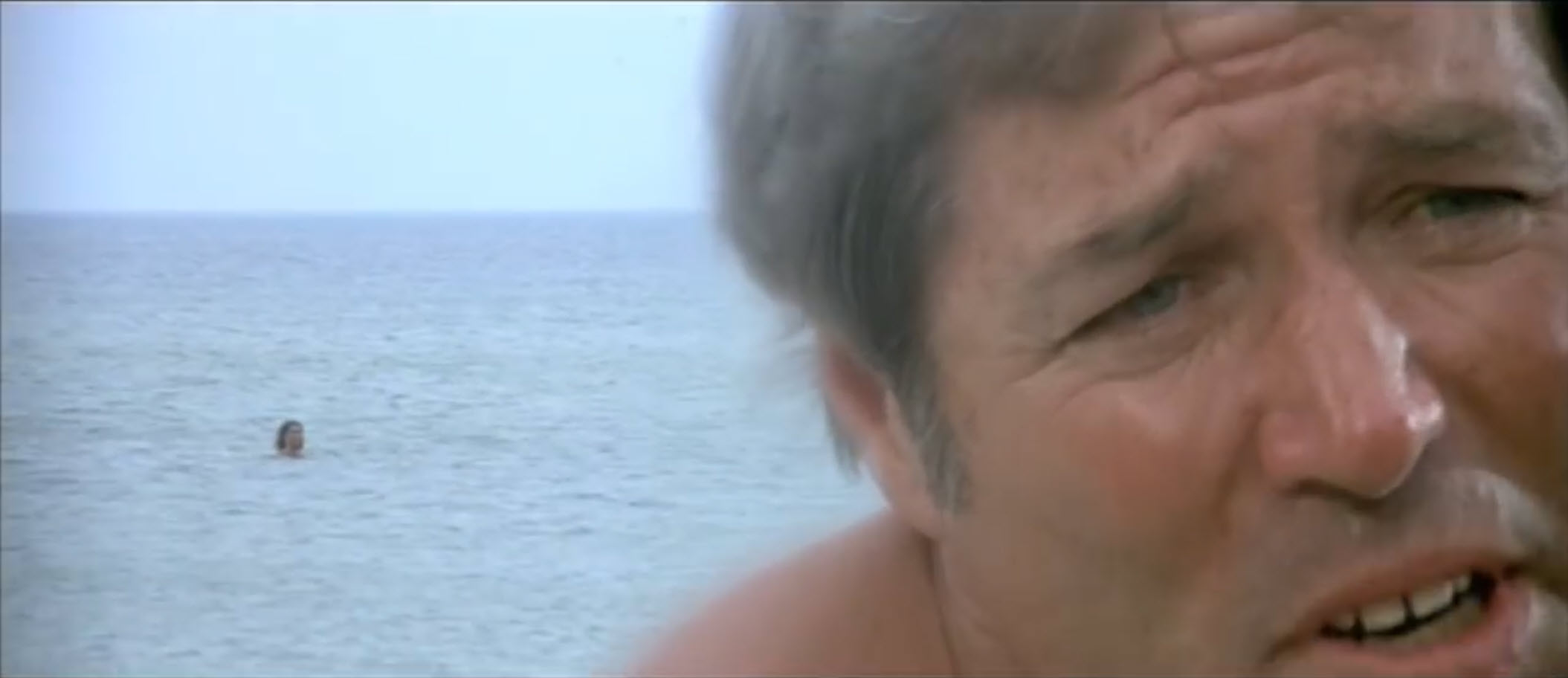
    “Jaws” dir. Steven Spielberg – still frame

    One of the primary functions of a POV shot is to immerse the audience in the character’s perspective, allowing viewers to see the world through their eyes. This technique effectively places the audience in the character’s shoes, intensifying emotional connection and empathy. In Steven Spielberg’s iconic film Jaws, POV shots are utilized to convey the tension and urgency experienced by the main character as he converses with a fellow beachgoer while simultaneously keeping a watchful eye on a woman in the water. This dual focus emphasizes the character’s awareness of the looming danger posed by the shark, heightening suspense and drawing the audience deeper into the narrative.

    2. Enhanced Performance Impact: 

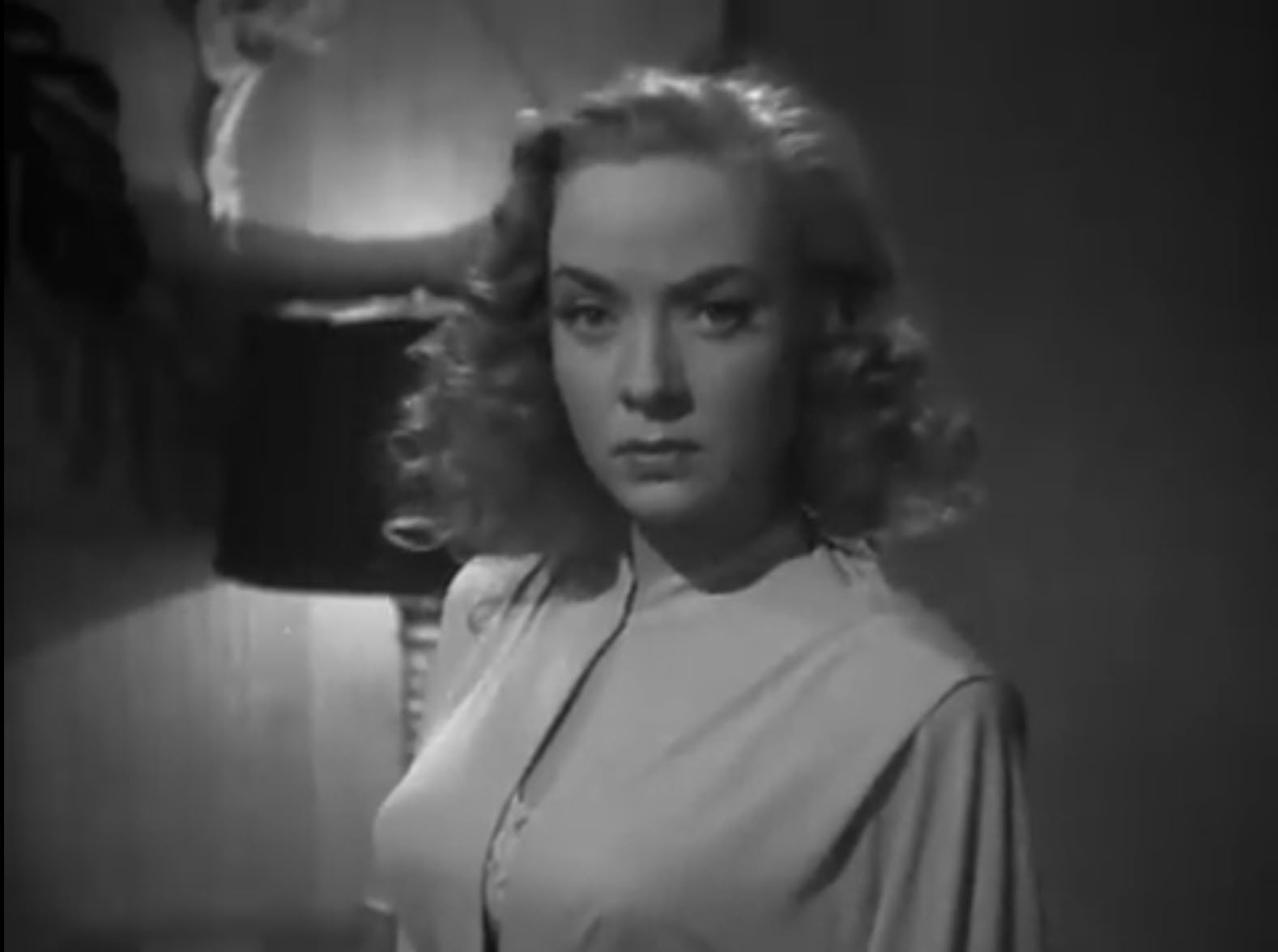
    Lady in the Lake” dir. Robert Montgomery – still frame

    Directing the camera to capture the actor’s performance directly uniquely engages the audience, intensifying the emotional impact of the scene. In films like Lady in the Lake, the use of POV shots creates a sense of intimacy as characters gaze directly into the camera, forging a powerful connection with the audience, and amplifying the intensity of the moment. However, it’s worth noting that this technique may lose its effectiveness if overused throughout an entire film. Barry Jenkins, renowned for his masterful storytelling in films like “Moonlight,” demonstrates the power of sparingly employing actors’ direct gazes into the camera, enhancing emotional resonance while maintaining narrative integrity.

    3. Perspective Revelation: 

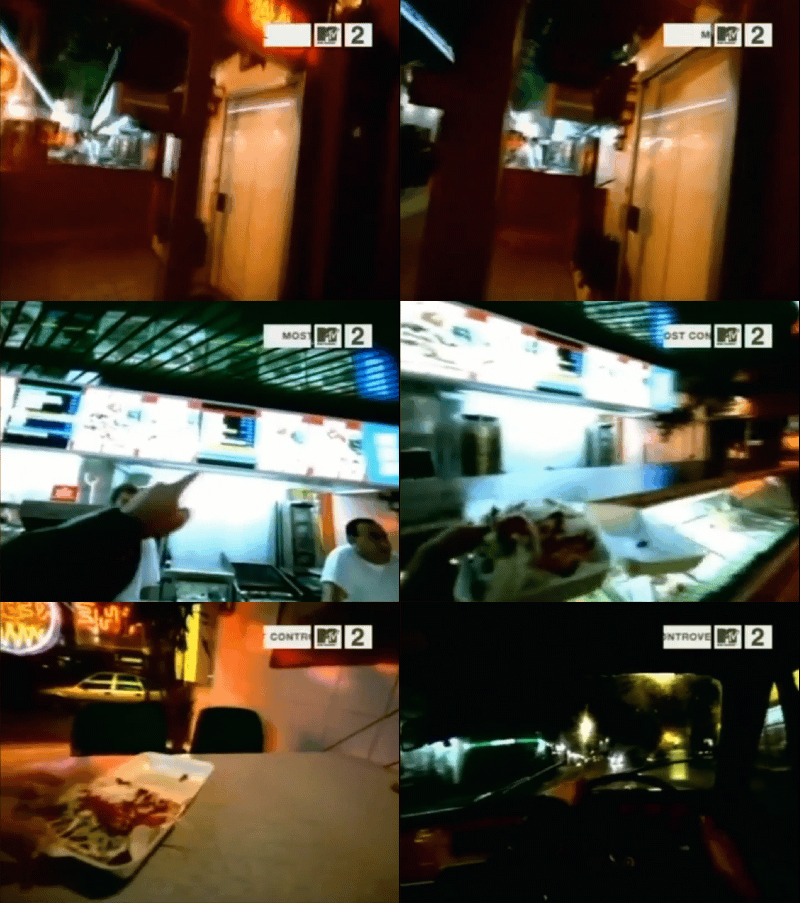
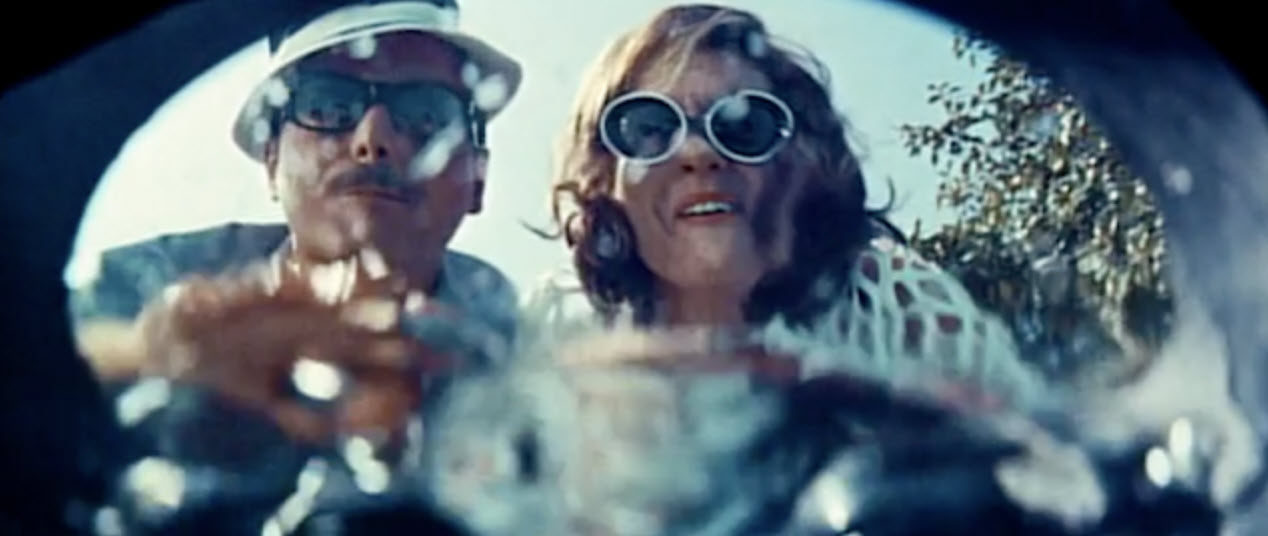
    Smack My Bitch Up” by Prodigy dir. of music video Jonas Åkerlund – gif

    POV shots offer filmmakers a potent tool to shock and surprise audiences by subverting expectations. In the music video ‘Smack My Bitch Up’ by Prodigy, the protagonist’s violent and erratic behavior leads viewers to presume the main character is male, as it aligns with typical stereotypes. Throughout the video, this assumption is reinforced, immersing the audience in a familiar narrative. However, the shocking finale reveals the protagonist’s true identity, defying stereotypes and delivering an unexpected twist that leaves a lasting impact. Despite it being just a music video for a dance track, upon revisiting it after all these years, I can’t help but recognize its deeper social criticism and underlying meaning. This deliberate manipulation of audience assumptions demonstrates the raw power of POV shots to provoke visceral reactions and challenge societal norms.

    4. Distorted Perspective: 

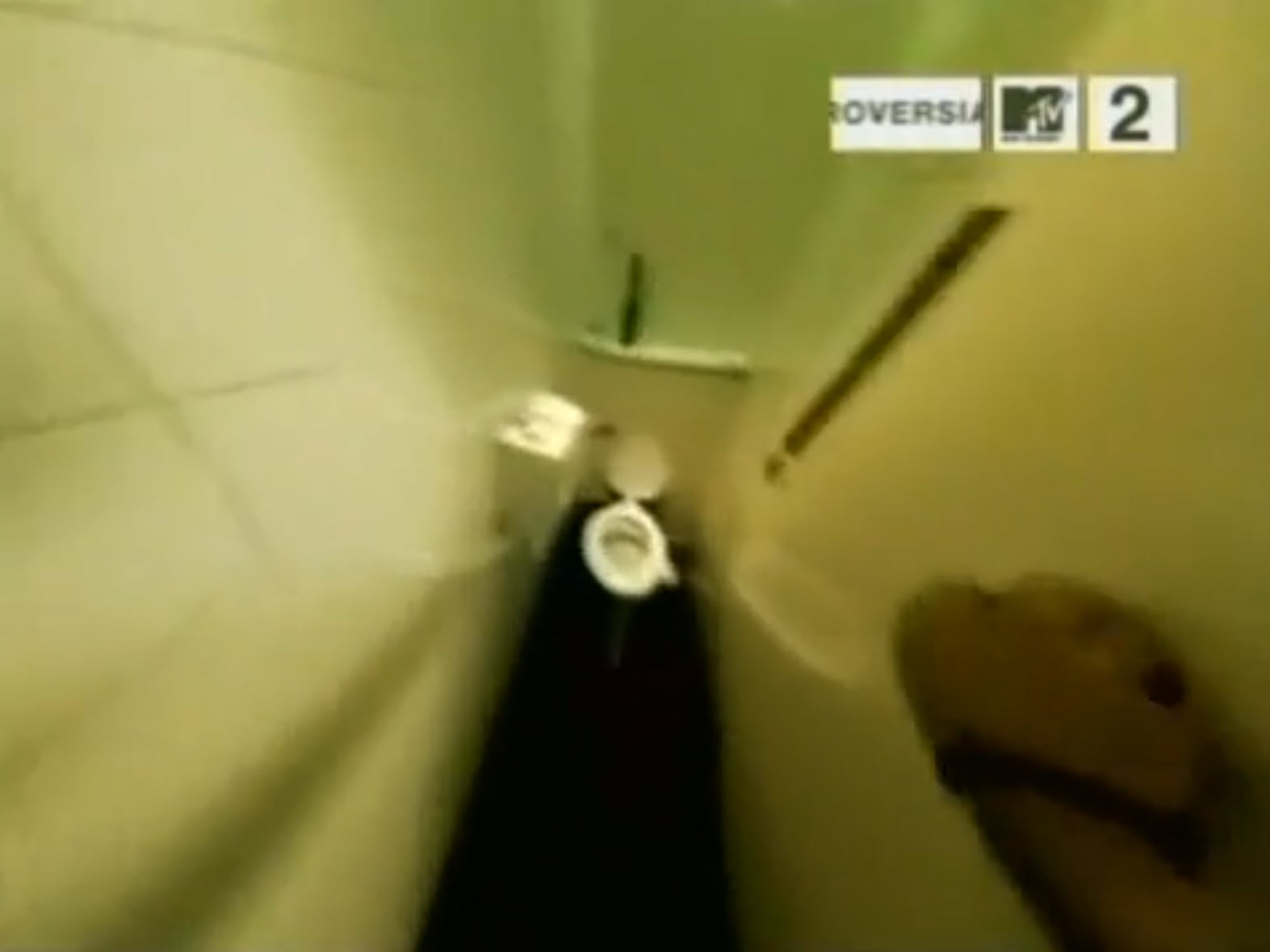
    Smack My Bitch Up” by Prodigy dir. of music video Jonas Åkerlund – gif

    POV shots can be utilized to portray a distorted or unconventional perspective, emphasizing characters who perceive the world differently. In the music video ‘Smack My Bitch Up’ by Prodigy, distorted POV shots depict the disorienting effects of drug use, providing insight into the altered state of the protagonist’s mind. This portrayal immerses the audience in the chaotic and disjointed world of the character, challenging their perceptions and evoking a sense of unease.

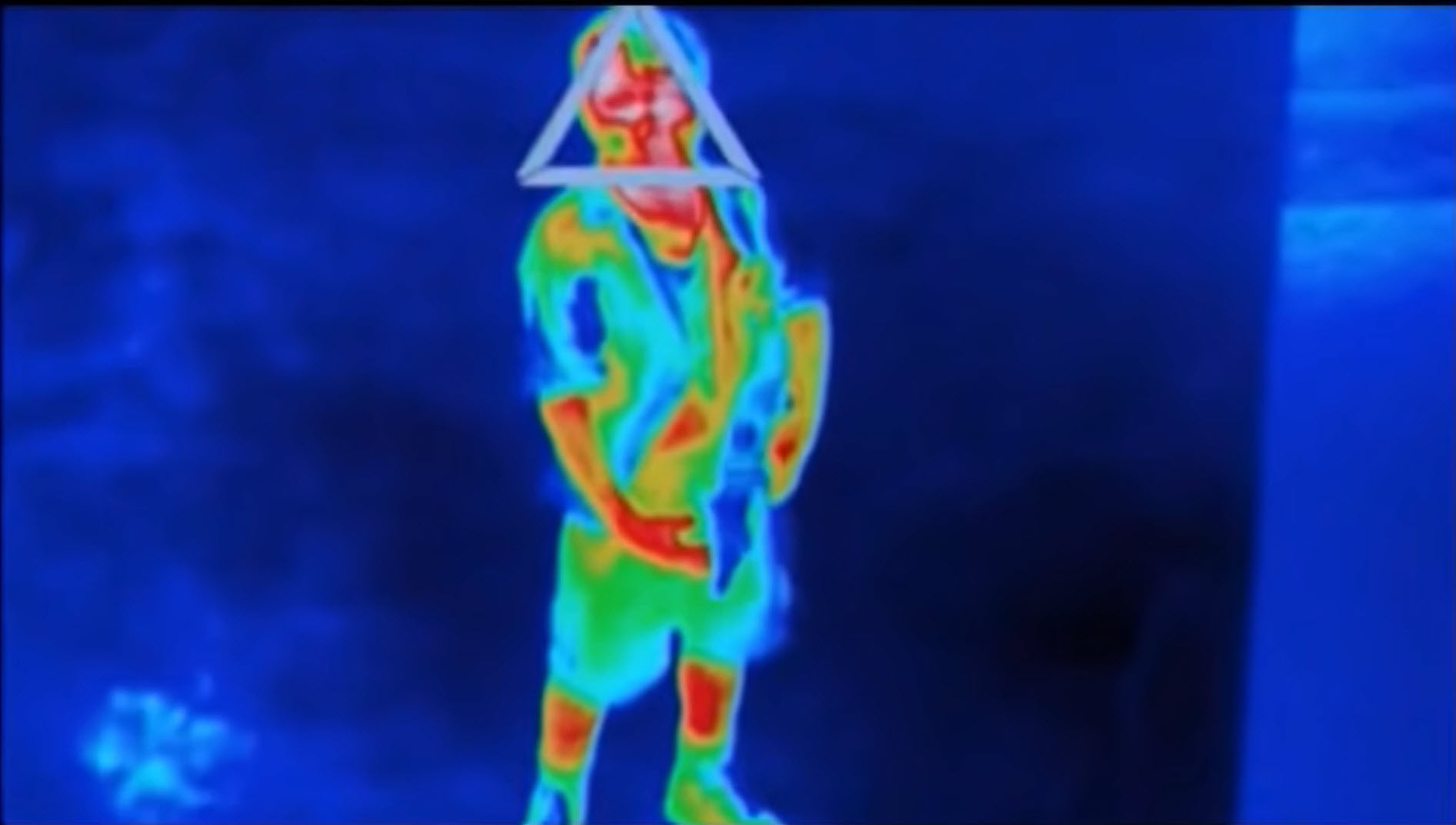
    “Predator dir. John McTiernan – still frame

    Similarly, in films like Predator and Terminator, the inhuman perspectives of aliens and robots are captured through POV shots, serving as eye candy and contributing to the genre’s aesthetic. By presenting the world from the vantage point of these non-human entities, filmmakers provide visual spectacle and enhance the overall experience for the audience, aligning with the expectations and conventions of the genre.

    5. Character Detachment and Barrier Representation: 

    “The Graduate” dir. Mike Nichols – still frame

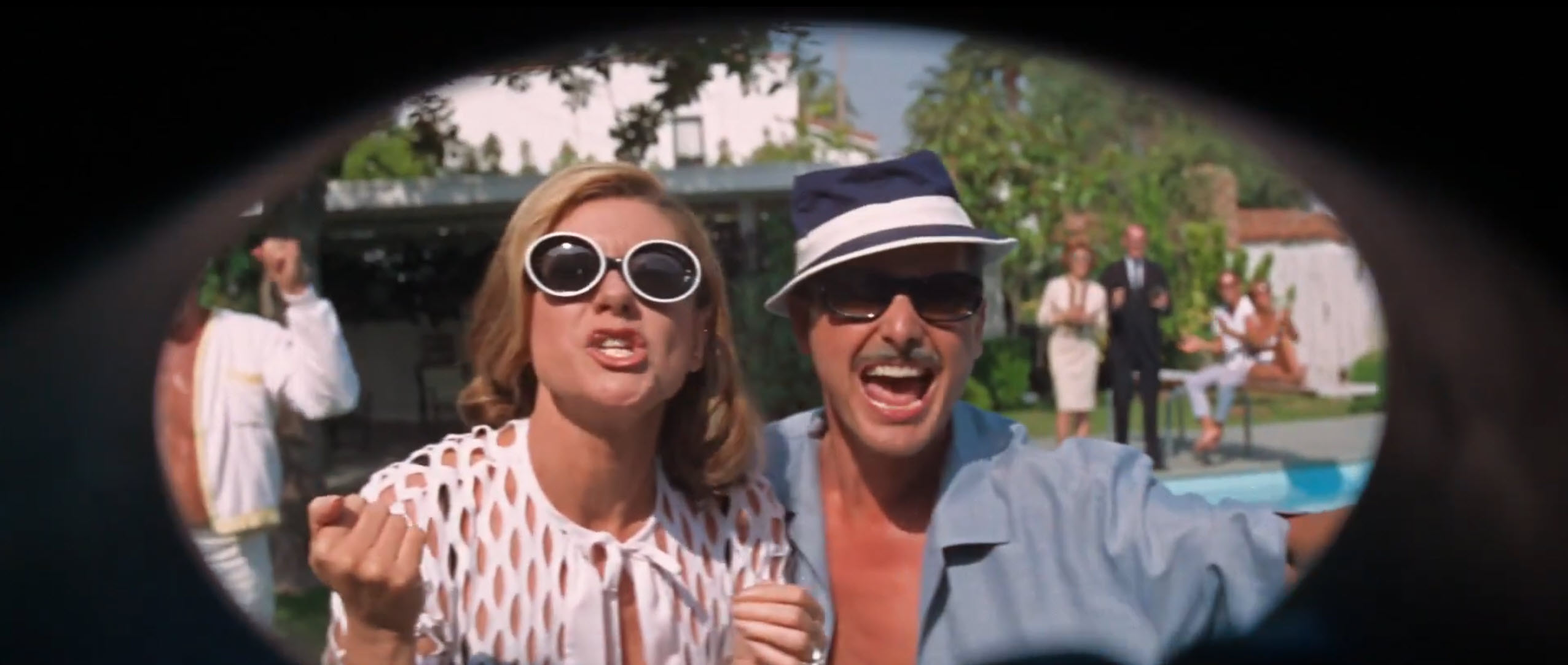
    Finally, vignettes of visors often serve as a visual cue to indicate that a character is peering through binoculars, providing a window into their perspective. While primarily used to showcase what the character is seeing, these cinematic devices can also carry deeper symbolic and dramatic significance, as demonstrated in Mike Nichols’ seminal film The Graduate. Let’s explore how the use of visors as a narrative device transcends mere observation to convey profound emotional and thematic undertones.

    POV shots serve as a powerful contrast to depict the detachment of characters from their surroundings. In the iconic scene from The Graduate, the use of a scuba diving mask symbolizes the protagonist’s isolation amidst a lively garden party. As sunlight illuminates the joyous gathering, the protagonist remains distant, lonely, and confused. The vignette of a scuba diving suit further accentuates his detachment, highlighting the stark contrast between his inner turmoil and the external facade of happiness. Moreover, the director employs sound design to deepen the sense of isolation; the main character can’t hear his parents talking to him and laughing. Instead, he is enveloped in the sound of his own breathing inside the scuba diving suit, intensifying the feeling of solitude and disconnection. Through this multifaceted approach, filmmakers effectively convey the character’s emotional disconnect and inner conflict, adding depth to the narrative and enhancing audience empathy.

    Point-of-view shots are a versatile and potent cinematic device, capable of enriching storytelling, intensifying emotional impact, and immersing the audience in the character’s perspective. Whether used to evoke empathy, suspense, or unease, POV shots remain a fundamental tool in the filmmaker’s arsenal, offering endless possibilities for creative expression. So, the next time you’re crafting a scene, consider the power of the POV shot to captivate and engage your audience in ways that transcend the screen.

    References:

    Definition of POV: https://en.wikipedia.org/wiki/Point-of-view_shot#cite_ref-tilta_5-0

    Experience the immersive tension of POV shots in “Jaws” here.

    Experience the impact of sparingly used POV shots in “Lady in the Lake” here.

    Experience the shocking perspective revelation in “Smack my bitch up” music video here.

    Experience the inhuman perspective in “Predator” here.

    Experience the character detachment in the final scene of “The Graduate” here.

  • Deciphering No Country for Old Men through the Symbolism of Three Wind Turbines

    Deciphering No Country for Old Men through the Symbolism of Three Wind Turbines

    The Cinematic Significance of “No Country for Old Men”

    “No Country for Old Men,” directed by the acclaimed Coen brothers, Joel and Ethan, stands as a cinematic tour de force that transcends the boundaries of genre and storytelling. Adapted from Cormac McCarthy’s novel, the film garnered critical acclaim, earning four Academy Awards, including Best Picture. Its enduring legacy lies in its masterful blend of suspense, philosophical exploration, and gripping character studies. Coen brothers knew exactly what is the film’s hidden meaning and it gave them the confidence to push the boundaries of storytelling. One of the examples of this decision is the sudden death of one of the protagonists in the middle of the story.

    In this article, I would like to focus on the first visual symbol of the hidden meaning that we see in the film.

    Symbolism in the Landscape: The Silent Sentinels

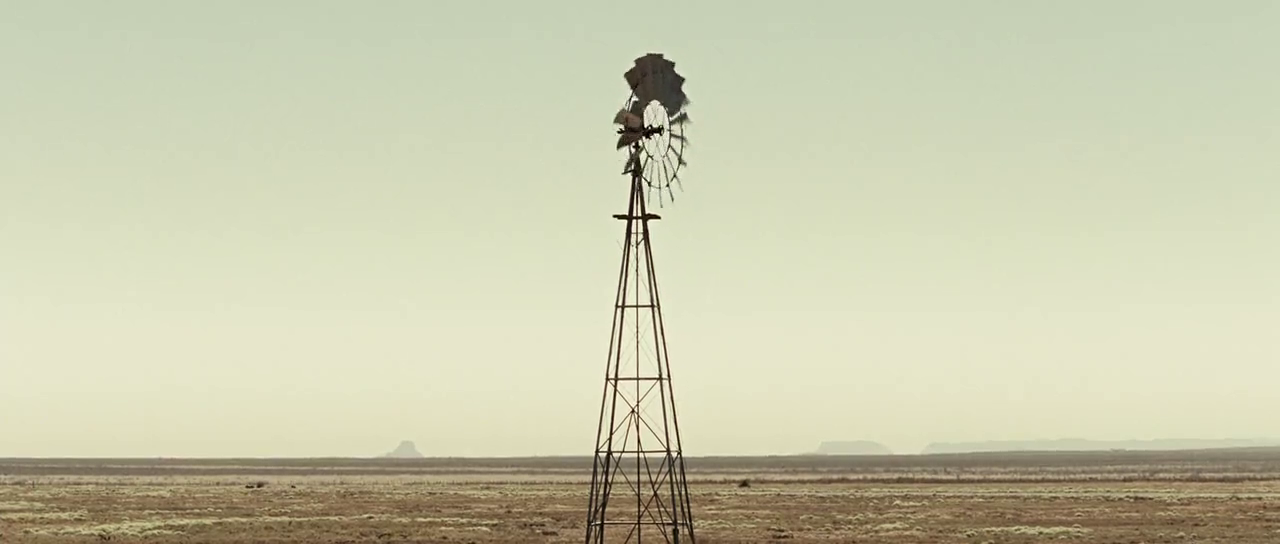
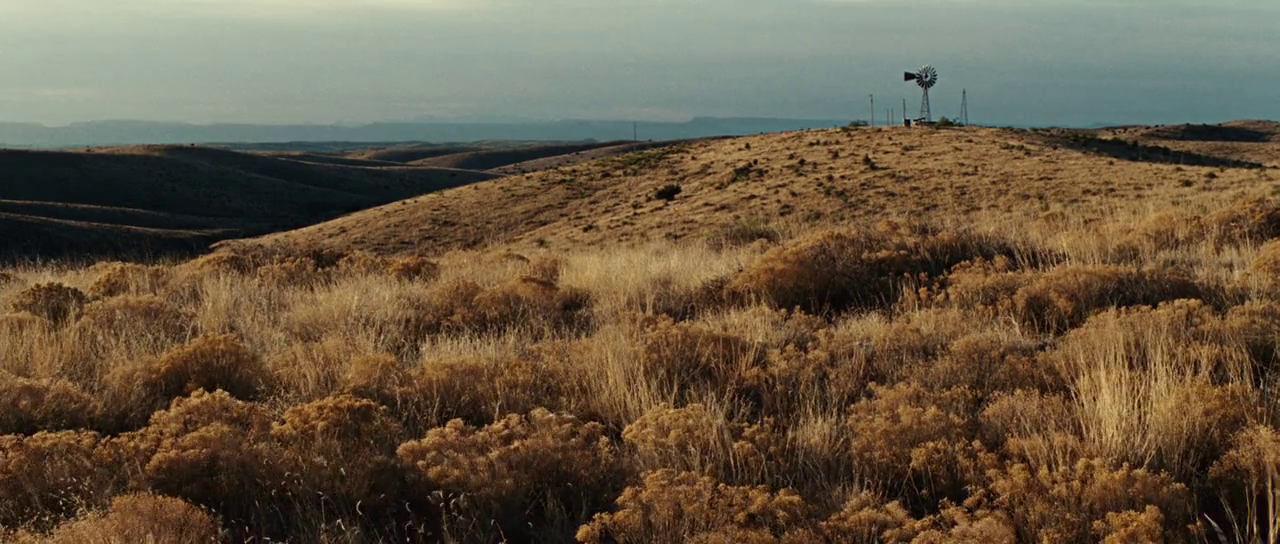
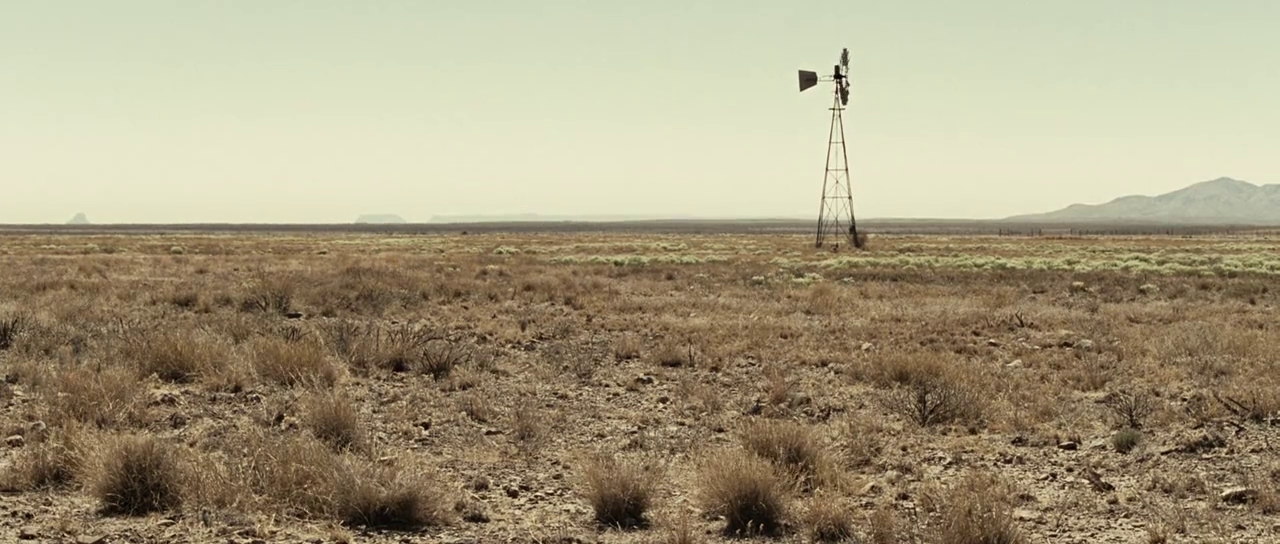
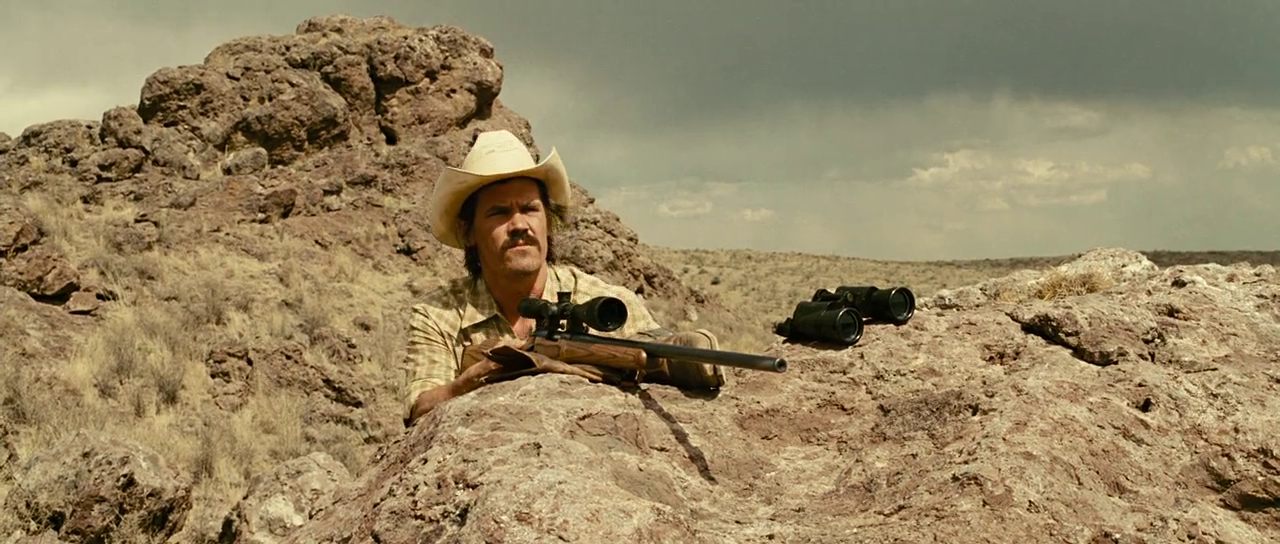
    Before the characters take the stage, the vast Texan landscape introduces us to three wind turbines, standing tall and silent. These turbines, far from being static elements, emerge as symbolic pillars, each embodying the essence of a central character—Sheriff Bell, Anton Chigurh, and Llewellyn Moss. Notably, the characters are introduced in the same order as the windmills—Sheriff Bell’s voice, the first turbine, resonates, followed by Anton Chigurh, mirrored by the second turbine. Intriguingly, Llewellyn Moss, the last character introduced in the film, aligns with the final windmill we see in the opening scene— the one with the broken rudder.

    “No Country for Old Men” dir. Joel Coen, Ethan Coen – still frame

    This symbolic triad sets the stage for a nuanced exploration of morality, chaos, and the choices that define the characters’ destinies.

    Challenging Conventions: Broken Rudder and Llewellyn Moss

    Common interpretations have often associated with this scene is that a windmill with a broken rudder is a visual metaphor for Anton Chigurh’s malevolence, yet a closer examination defies this convention. The broken rudder, in its subtle yet profound symbolism, aligns with the tumultuous journey of Llewellyn Moss. To grasp the intricacies of this revelation, one must delve deep into the hidden meanings meticulously woven by the Coen brothers into the narrative.

    “No Country for Old Men” dir. Joel Coen, Ethan Coen – still frame

    Navigating Chaos: The Film’s Philosophical Core

    “No Country for Old Men” extends beyond the traditional confines of a suspenseful thriller. At its philosophical core, the film grapples with the nature of chaos in the world and the profound choices individuals make within its unpredictable confines. The three central characters embody distinct approaches to navigating this chaos. Anton Chigurh and Sheriff Tom Bell emerge as contrasting manifestations of belief systems, while Llewellyn Moss becomes the unwitting agent of chaos as he continually veers away from his moral compass.

    “No Country for Old Men” dir. Joel Coen, Ethan Coen – still frame

    Characters as Vessels of Belief Systems

    Anton Chigurh, a nihilist who embraces the randomness of existence, epitomizes the film’s hidden meaning with his unyielding adherence to chance. Conversely, Sheriff Tom Bell’s steadfast commitment to law and order reflects a belief system that provides him with a semblance of order in a chaotic world. Llewellyn Moss, the ex-soldier driven by love and honor, becomes the intriguing anomaly, constantly breaking his own rules.

    The Unraveling of Llewellyn Moss: Breaking the Rules

    Llewellyn Moss emerges as a character whose moral compass dances on the edge of ambiguity. An ex-soldier with an honorable past and love for his girlfriend, Moss breaks his own rules for the first time by deciding to steal the ill-fated money he stumbles upon in the aftermath of a drug deal gone wrong. This pivotal decision, breaking from his own principles, sets the stage for a relentless exploration of the consequences that arise when an individual chooses to navigate their own path within the chaos of the world.

    Therefore, the broken rudder is a poignant symbol of Moss’s internal discord. Constantly teetering on the edge of morality, Moss faces a series of choices that lead him further away from the virtuous ideals of the good man he is. His decision to partake in the chaos that unfolds setts into motion a chain of events that will ultimately define his tragic fate.

    “No Country for Old Men” dir. Joel Coen, Ethan Coen – still frame

    The Consequences of Moral Ambiguity: Moss’s Turbulent Journey

    As Moss navigates the perilous terrain of deceit, greed, and survival, the broken rudder on the wind turbine mirrors the fractured state of his moral compass. Each deviation from his own principles contributes to the destabilization of his world. The Coen brothers, through this visual metaphor, invite the audience to question the nature of morality and the consequences that befall those who choose to break their own rules in a world filled with chaos.

    Chigurh and Bell: Towers of Belief Amidst Chaos

    In juxtaposition to Moss’s turbulent journey, Anton Chigurh and Sheriff Tom Bell stand as towers of belief within the chaos depicted in the film. Chigurh’s nihilistic worldview, epitomized by his adherence to the flip of a coin, aligns with the film’s hidden meaning of a world governed by blind chance. Despite the apparent malevolence in his actions, Chigurh adheres to his own code, adding a layer of irony to his role as an agent of chaos.

    Sheriff Bell, on the other hand, stands tall as a beacon of order in the tumultuous landscape. Though he grapples with a sense of being “overmatched” by the evolving evil embodied by Chigurh, Bell’s commitment to the principles of law and order remains unwavering. His decision to confront the killer, despite evident fear, serves as a testament to the power of personal conviction in the face of chaos.

    The Broken Rudder: Moss’s Tragic Arc

    Returning to Moss, the broken rudder on the wind turbine gains resonance as his journey unfolds. The narrative arc of his character becomes a tragic exploration of the consequences of moral ambiguity and the self-imposed chaos that arises when one deviates from their own principles.

    “No Country for Old Men” dir. Joel Coen, Ethan Coen – still frame

    The broken rudder on Llewellyn Moss’s turbine becomes this film’s first visual manifesto, urging the audience to contemplate the consequences of personal choices and the chaos that ensues when individuals defy their own moral codes. As we unravel the hidden meanings within this cinematic gem, we find not just a tale of suspense but a philosophical exploration of the human condition and morality.

  • Shot Sizes – Subdivision by how many subjects are in the frame

    Shot Sizes – Subdivision by how many subjects are in the frame

    In film and video production, a field size or shot size refers to how much of the subject is visible within the frame of the camera. It is a way of describing the relative distance between the camera and the subject being filmed, and it is an essential component of visual storytelling in film.

    We have explored the most basic shot sizes in cinematography in THIS POST. Apart from the field size, you can also differentiate them in regard to how many subjects are in the frame. Here are the most basic examples:

    Two Shot

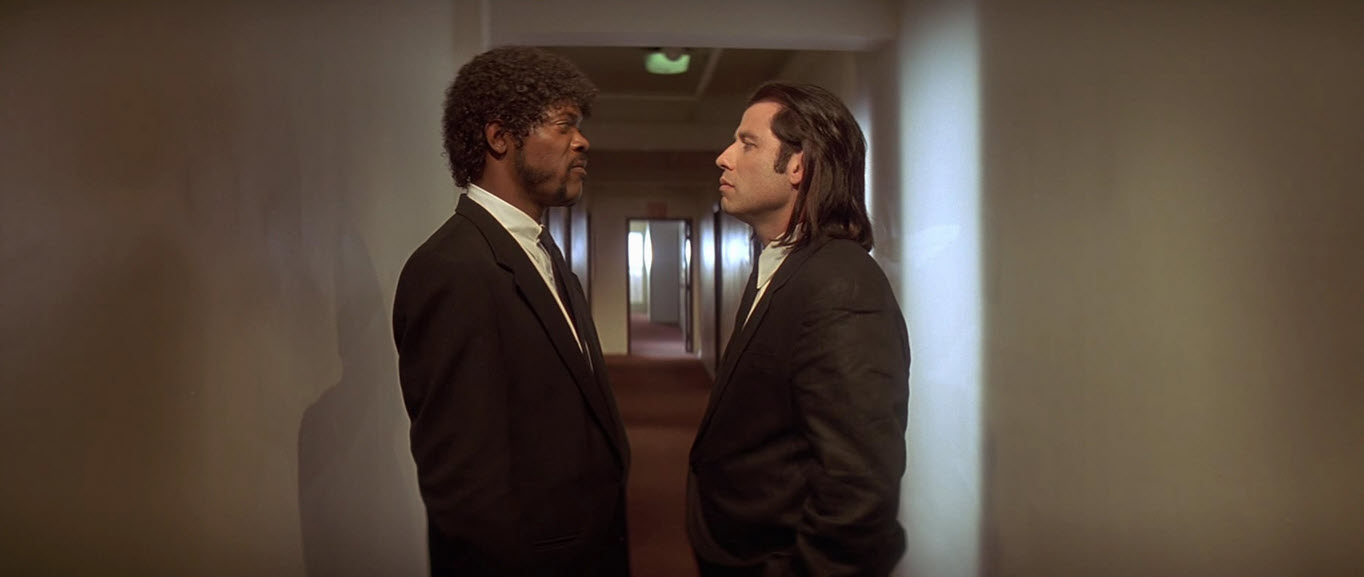
    This shot shows two subjects in the frame together, often to convey their relationship or dynamic.

    An example of this shot can be seen in “Pulp Fiction” (1994), which shows the characters Vincent Vega (John Travolta) and Jules Winnfield (Samuel L. Jackson) in a two-shot as they discuss the meaning of a foot massage.

    Over-the-Shoulder Shot (OTS)

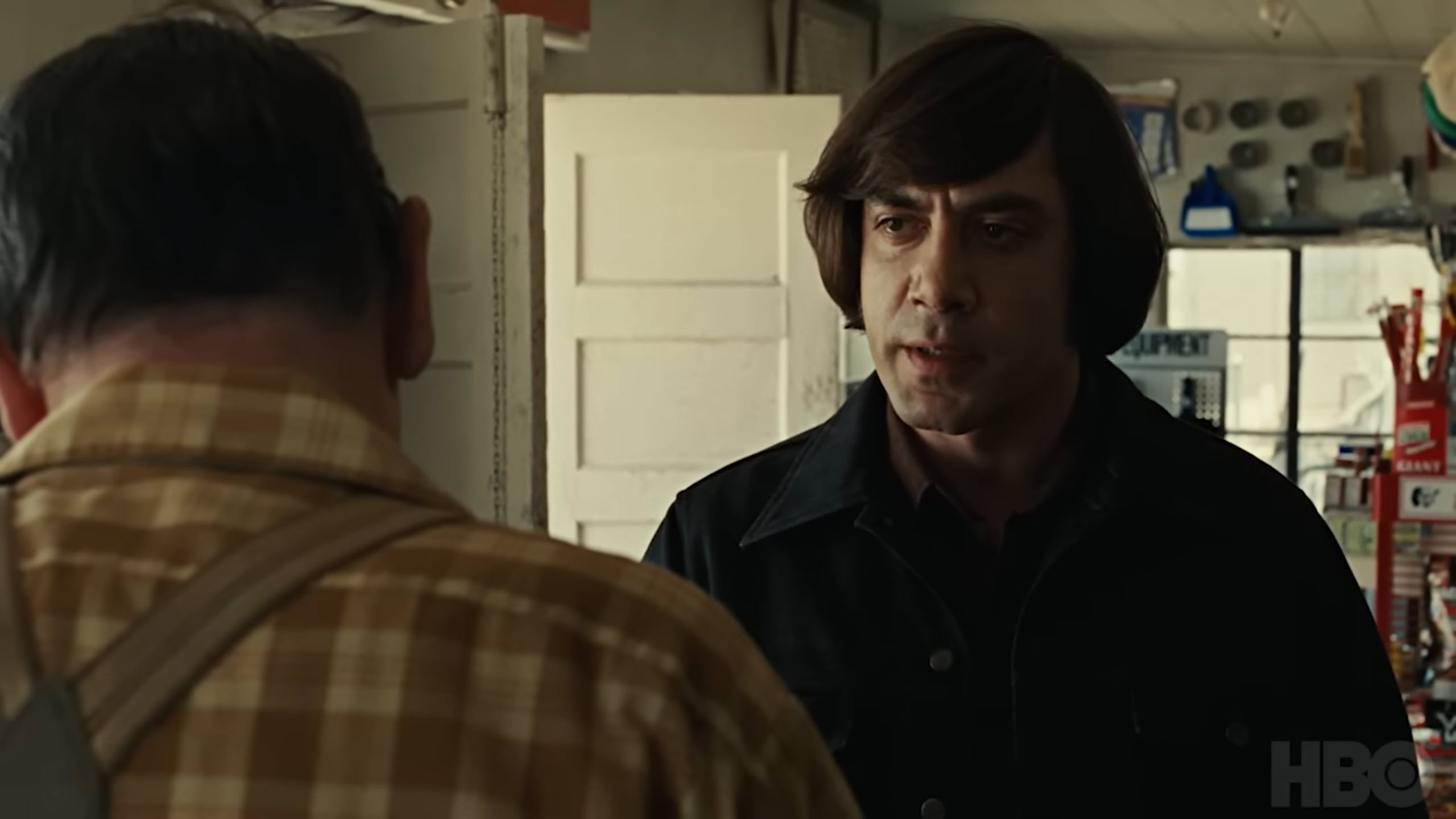
    This shot shows one subject from behind the shoulder of another subject, often used in dialogue scenes. OTS shots are commonly used to connect characters within the space of the scene, providing a sense of spatial continuity and helping to establish the relationships between characters. By showing both characters in the same shot, OTS shots allow the audience to see the reactions of each character as they speak or interact with one another. This can be especially effective in dialogue-heavy scenes, where the reactions of each character are an important part of the scene’s emotional impact.

    A great example of this is a scene from “No Country for Old Men” where Anton Chigurh is threatening a clerk.

    The OTS shots are a tool to bind these two characters together in the space and make the tension more visible.

    Point-of-View Shot (POV)

    This shot shows what the character is seeing from their own perspective, often used to put the viewer in the character’s shoes.

    In “The Graduate” (1967), there is a famous POV shot where the audience sees the world through the scuba diving mask of Dustin Hoffman’s character, Benjamin.

    In this shot, we see a distorted view of the world as if we’re underwater, with objects appearing larger and closer than they actually are. This POV shot serves to highlight Benjamin’s feelings of confusion and uncertainty as he tries to navigate the complexities of adult life. It also creates a sense of detachment and alienation from the world, which is a recurring theme throughout the film. Overall, this POV shot is a powerful visual representation of Benjamin’s inner turmoil and sense of disconnect from the world around him.

    Interested in mastering shot sizes and taking your cinematography skills to the next level? Watch my concise course, ‘Fundamentals of Cinematography: Every Shot Size Explained,’ where I’ll explain the most important shot sizes and their functions. Whether you’re a beginner or an experienced filmmaker, this course is designed to help you choose the right shot size to make your actors’ performances really shine. We’ll go through every major shot size and provide examples from my own films and other well-known movies to illustrate their use and professional vocabulary.

  • Shot Sizes in Cinematography

    Shot Sizes in Cinematography

    Shot size in cinematography refers to the framing and composition of a shot in relation to the subject being filmed. It can be defined as the distance between the camera and the subject, or the amount of the subject that is visible within the frame. The shot size is determined by the placement of the camera and the lens used, and it can greatly impact the visual storytelling of a film.

    Shot sizes are an essential aspect of visual storytelling, as they can convey a range of emotions, perspectives, and information to the audience. Different shot sizes are used to communicate different aspects of a scene or character, and they can create a sense of intimacy or distance, depending on the desired effect. Shot sizes are also an important tool for filmmakers to guide the viewer’s attention and emphasize certain elements of the scene. By utilizing different shot sizes effectively, filmmakers can create a visually engaging and emotionally resonant cinematic experience for their audiences.

    Here is a list of the most important shot types with examples:

    Extreme Long Shot (ELS): This shot shows the subject from a great distance, and is often used to establish a location or give the viewer a sense of scale. An example of this shot can be seen in the opening shot of the movie “Lawrence of Arabia” (1962).

    Lawrence of Arabia

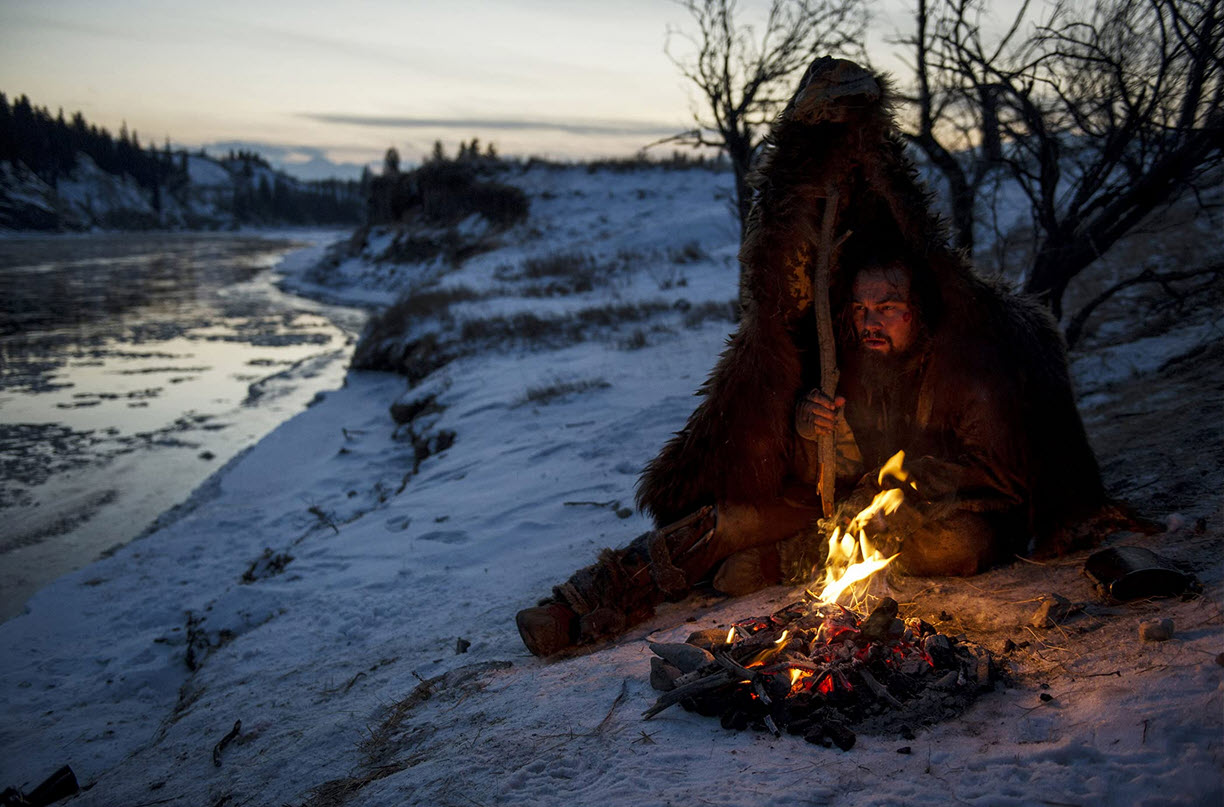
    Long Shot (LS): This shot shows the full body of the subject, along with some of the surrounding environment. It is often used to establish a character or setting.

    Revenant

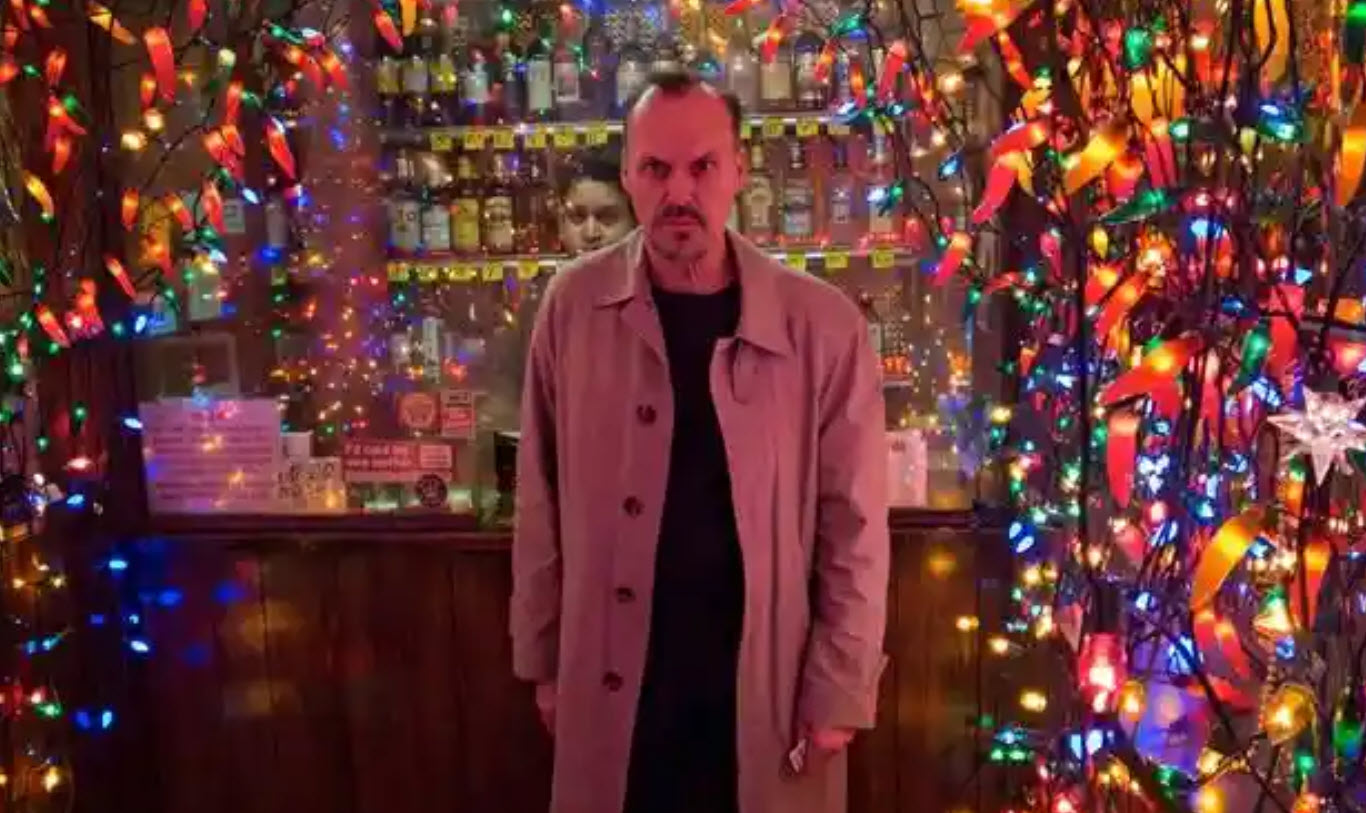
    Medium Long Shot (MLS): This shot shows the subject from the knees up, and is often used to establish the physical relationship between characters or objects.

    Birdman

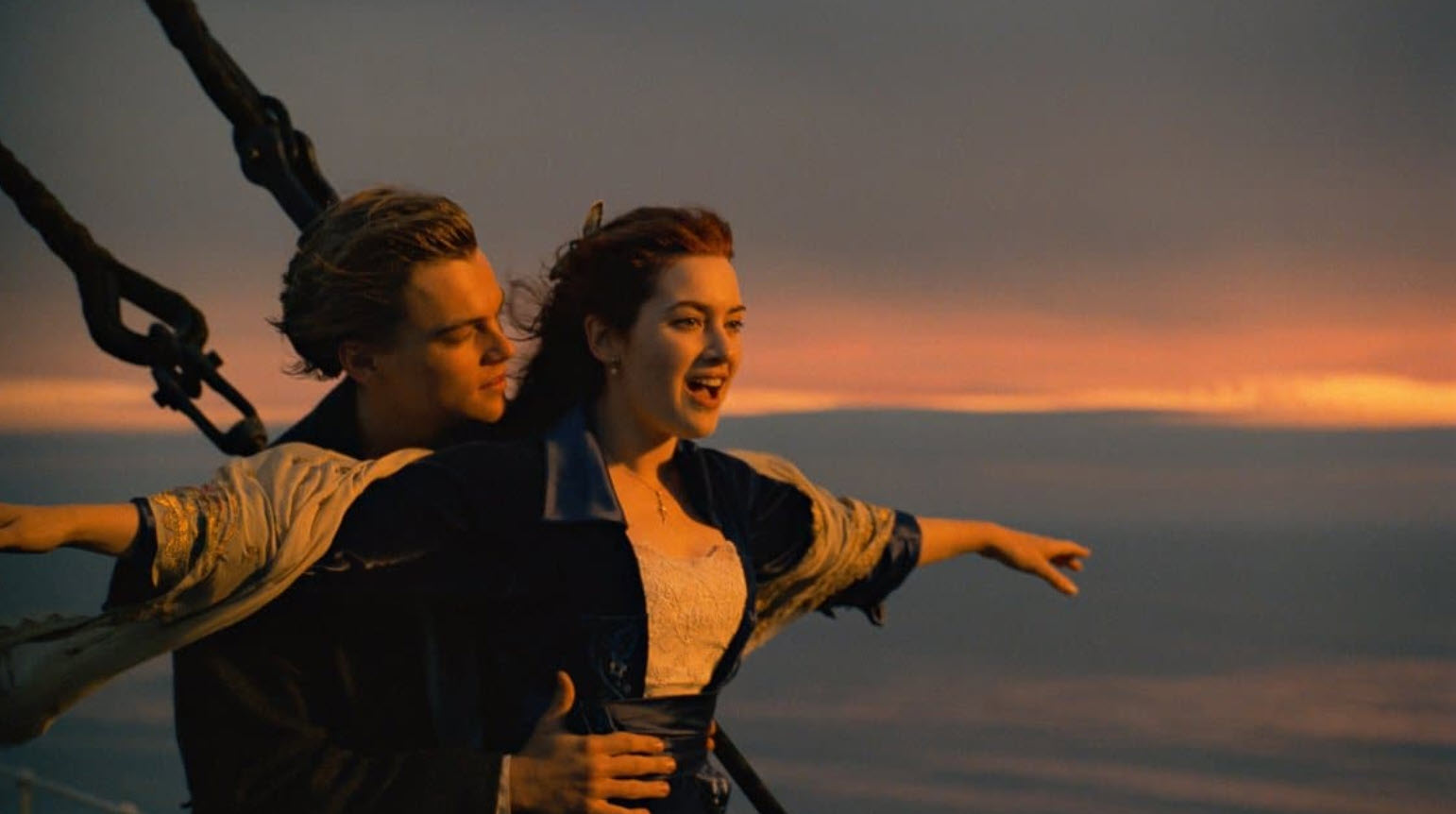
    Medium Shot (MS): This shot shows the subject from the waist up, and is often used for dialogue scenes or to show the subject’s body language.

    Titanic

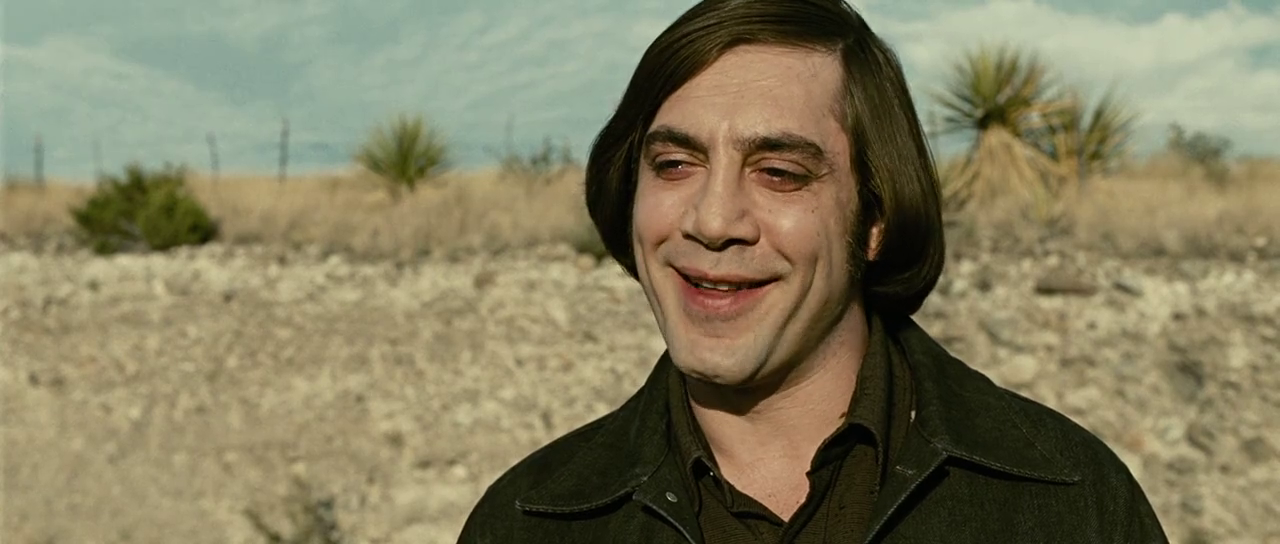
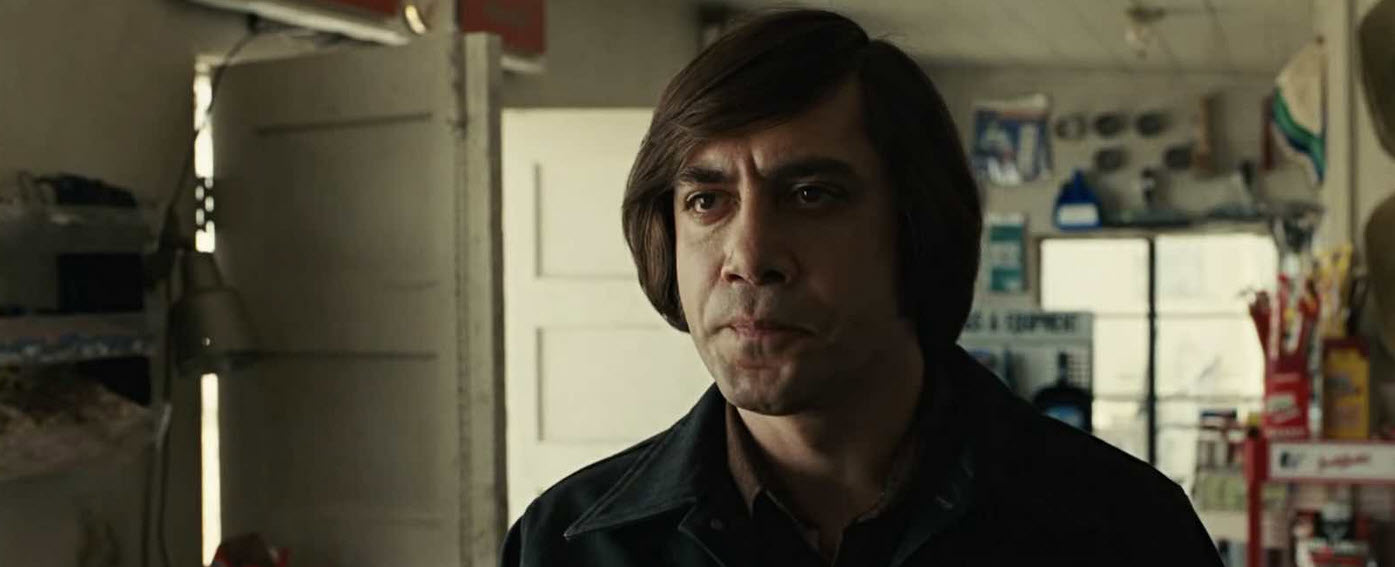
    Medium Close Up (MCU): This shot shows the subject from the chest up, and is often used to convey emotions or reactions.

    No Country for Old Men

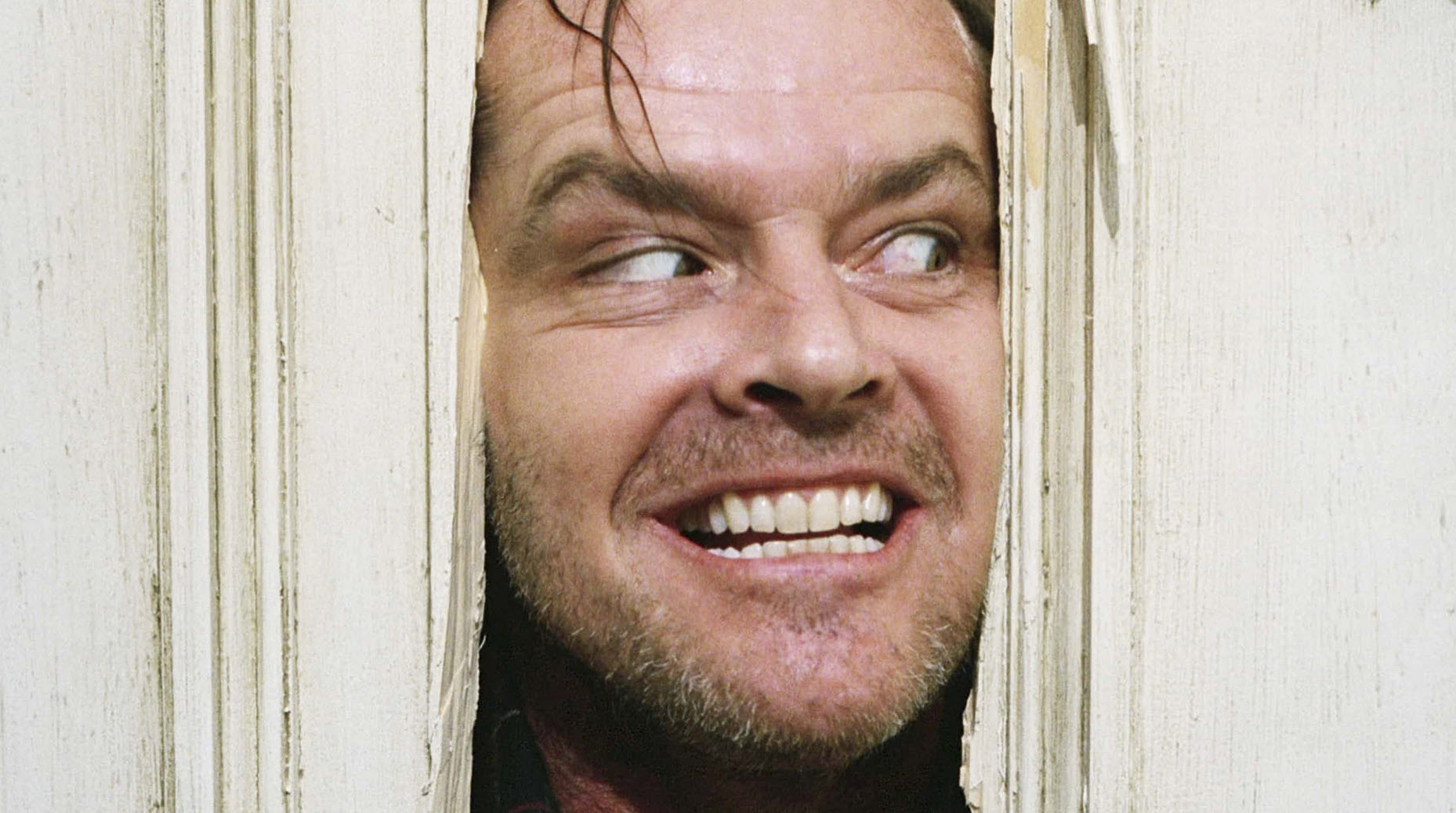
    Close-Up (CU): This shot shows the subject’s face in detail, and is often used to emphasize emotions or important dialogue.

    Shining

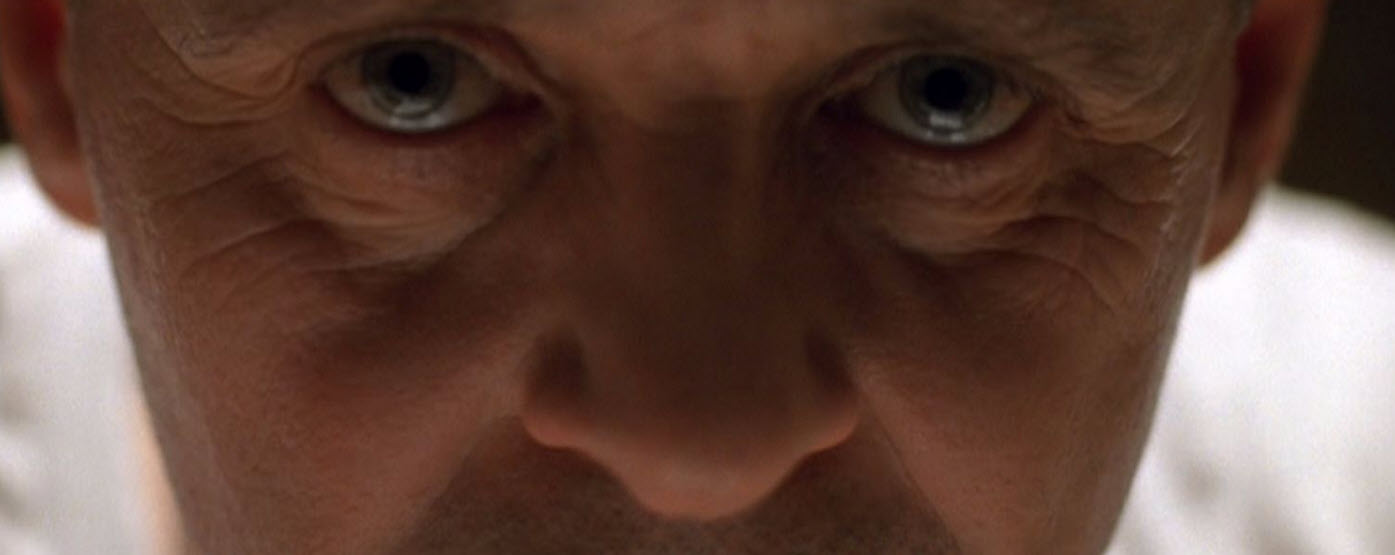
    Extreme Close-Up (ECU): This shot shows a small detail of the subject, such as the eyes or mouth. It is often used for emphasis or to create a sense of intimacy.

    Silence of the Lambs

    Interested in mastering shot sizes and taking your cinematography skills to the next level? Watch my concise course, ‘Fundamentals of Cinematography: Every Shot Size Explained,’ where I’ll explain the most important shot sizes and their functions. Whether you’re a beginner or an experienced filmmaker, this course is designed to help you choose the right shot size to make your actors’ performances really shine. We’ll go through every major shot size and provide examples from my own films and other well-known movies to illustrate their use and professional vocabulary.

    You can explore another division in shot types in this post: Shot Sizes – Subdivision by how many subjects are in the frame

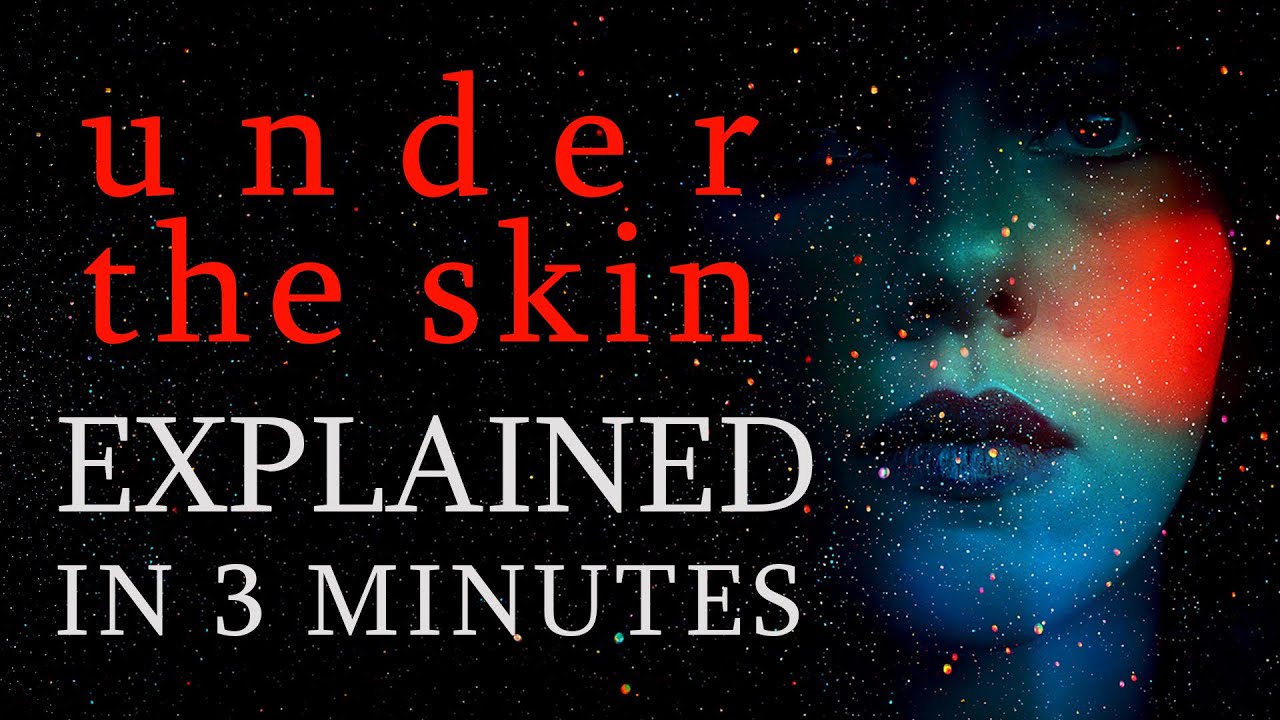
  • Under The Skin explained in 3 minutes

    Under The Skin explained in 3 minutes

    If you’re still not sure what was “Under the skin” about, watch that clip. It will provide the answers to this very ambiguous masterpiece. I always recommend rewatching the films you liked, but this particular one is richer when you see it the second time with the comfort of actually knowing what’s going on. In the future I might do a detailed analysis of this movie. I already have the Walter Campbell, Jonathan Glazers screenplay. I also have Michel Fabers book that it was based upon.

    #UnderTheSkin #CinemaExplained #summary

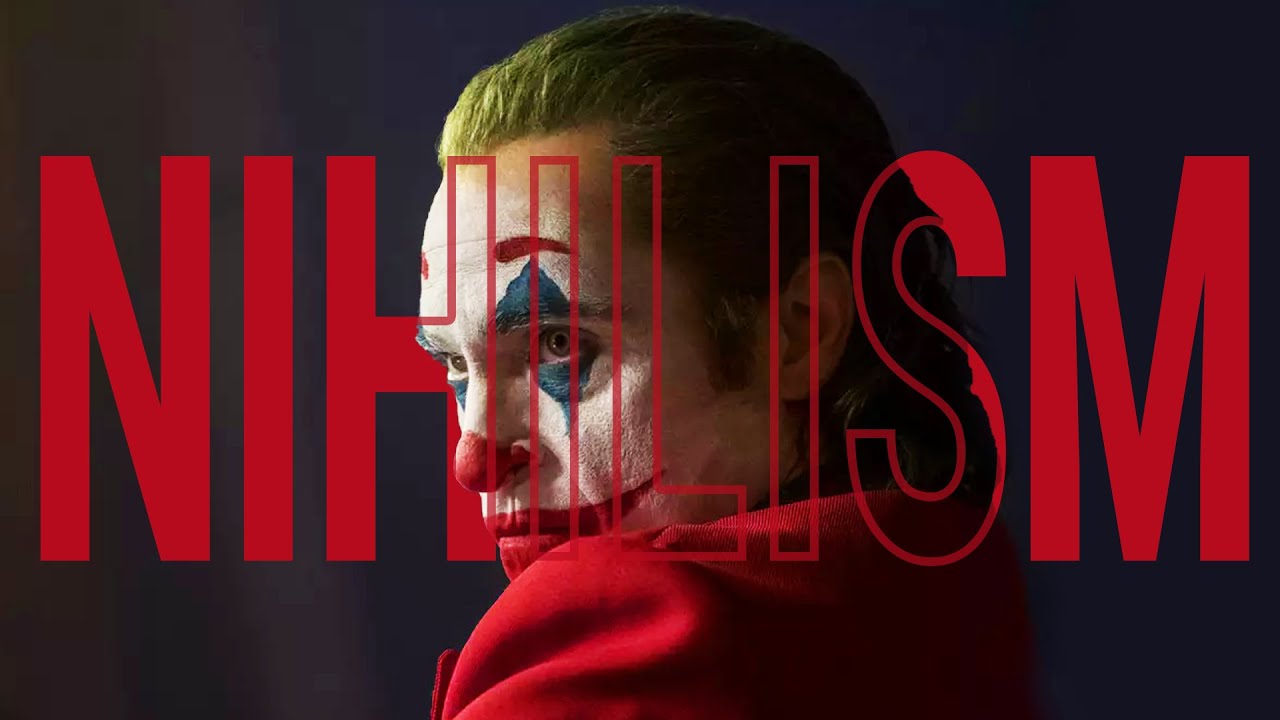
  • Joker EXPLAINED in 3 minutes

    Joker EXPLAINED in 3 minutes

    Todd’s Philips 2019 Joker is a very good movie. But why so nihilistic? In this video, I explain the meaning behind Arthur’s journey.

    #joker #filmanalysis #cinemaexplained

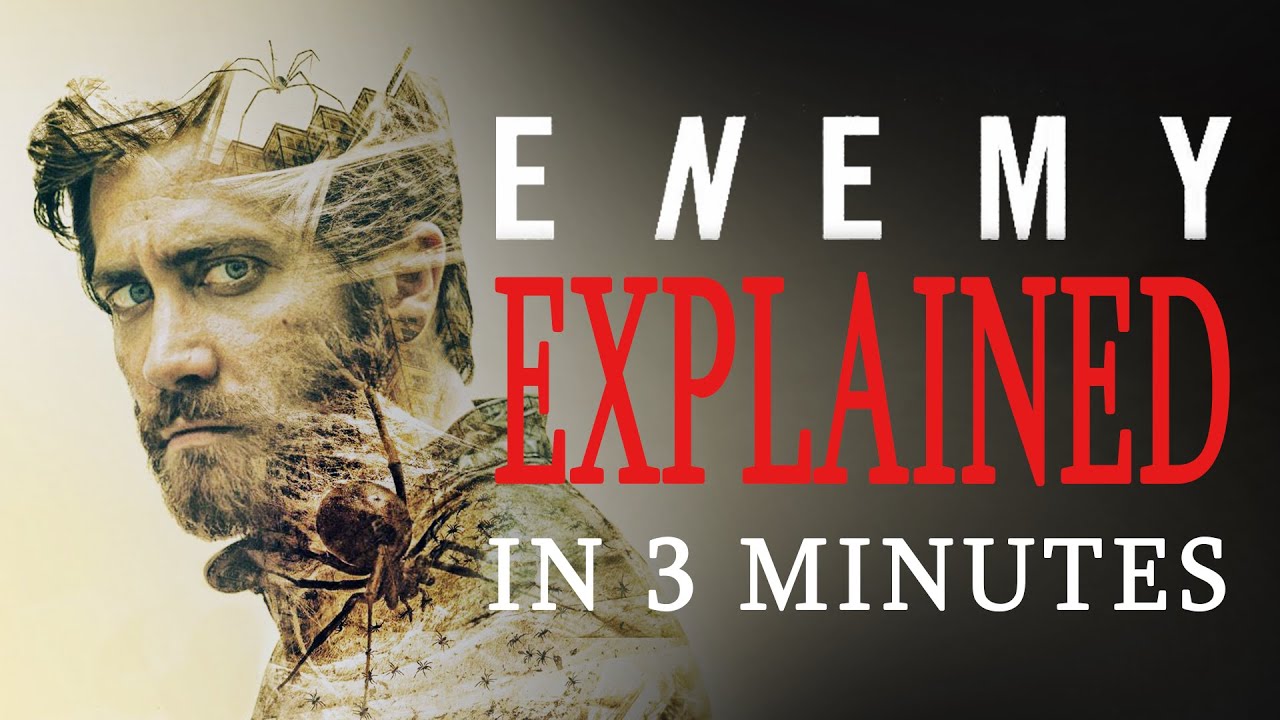
  • Enemy with Jake Gyllenhaal explained in 3 minutes

    Enemy with Jake Gyllenhaal explained in 3 minutes

    If you’re still not sure what was “Enemy” about, watch that clip. It will provide the answers to the story and an ambiguous ending. Great acting from Jake Gyllenhaal and cryptic storytelling from Denis Villeneuve made this film one of my favorites of 2014. There are many SPOILERS in the video. You have been warned.

    #enemy #filmanalysis #cinemaexplained

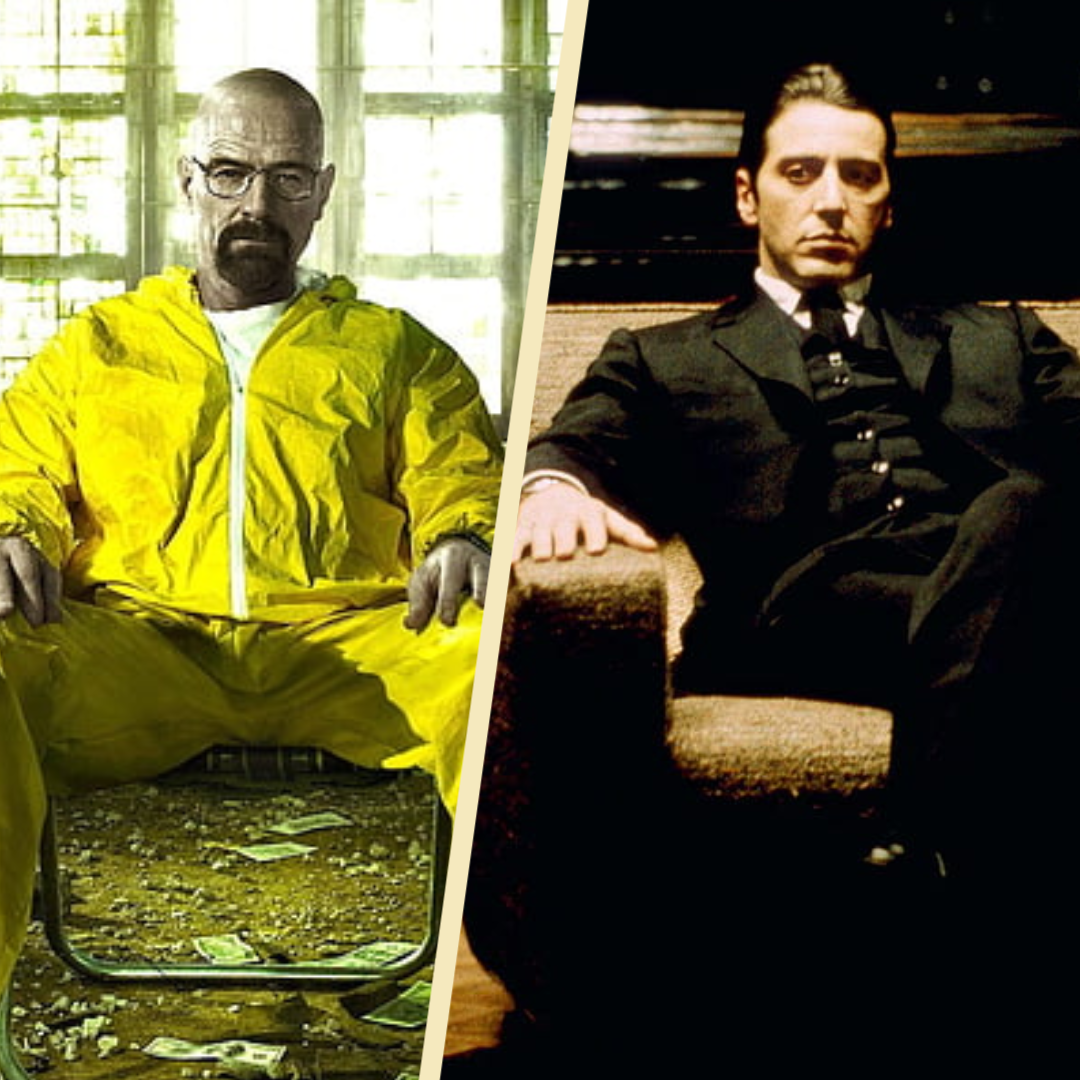
  • Character Arcs: Walter White is Michael Corleone

    Character Arcs: Walter White is Michael Corleone

    The realm of storytelling is enriched by the presence of complex and deeply flawed characters who embark on transformative journeys. Two iconic figures, Michael Corleone from the 1972 film “The Godfather” and Walter White from the television series “Breaking Bad,” exemplify the enthralling nature of some specific types of character arcs.

    A character arc is the transformation or inner journey of a character over the course of a story. If a story has a character arc, the character begins as one sort of person and gradually transforms into a different sort of person in response to changing developments in the story.

    Although the stories of Walter and Michael differ in genre and medium, the striking similarities between narratives are remarkable. Both characters find themselves entangled in a treacherous web of criminality, and tragically, they lose their families in their pursuit to save them. This article explores the captivating parallel character arcs of Michael Corleone and Walter White:

    1. From Reluctance to Embrace: Michael Corleone, initially distancing himself from his family’s criminal activities, is drawn into the world of organized crime due to circumstances beyond his control. Similarly, Walter White, a high school chemistry teacher turned methamphetamine manufacturer, doesn’t even think about a criminal lifestyle. As circumstances worsen, both characters find themselves succumbing to the seductive power of their newfound roles.

    2. Necessity as the Catalyst: For both Michael and Walter, the catalyst for their transformation is a desperate need to protect their families. Michael’s sense of duty drives him to take charge of his family’s criminal empire and ensure their safety. Similarly, Walter, after being diagnosed with terminal cancer, turns to manufacturing and distributing drugs to secure his family’s financial future. Both characters operate under the belief that they are making sacrifices for the greater good, but their choices come with devastating consequences.

    3. Losses Incurred: While striving to protect their families, Michael and Walter experience profound losses. Michael’s ascent into power leads to the disintegration of his personal relationships, estranging him from his second wife, Kay, and alienating him from his siblings. Walter, too, faces the erosion of his family bonds as his illicit activities consume his life. His wife, Skyler, becomes increasingly distant, and his son, Walter Jr., grapples with the repercussions of his father’s choices. Ultimately, both characters sacrifice the very thing they set out to save— their families.

    4. Moral Decline: As Michael and Walter plunge deeper into the criminal underworld, their moral compasses become increasingly distorted. Michael, originally viewed as the innocent son, transforms into a ruthless and calculating mob boss, shedding his initial reservations. Walter, a once well-intentioned family man, descends into darkness, rationalizing his actions in the name of providing for his loved ones. The boundaries of right and wrong blur for both characters as they become consumed by their own power and ambitions.

    5. The Tragic Irony: The tragic irony lies in the realization that Michael and Walter’s efforts to save their families ultimately result in their undoing. Michael’s ruthless pursuit of power leads to the loss of his loved ones (the death of his wife Apollonia in a car bomb, he orders the assassination of his brother Fredo), leaving him isolated and tormented by guilt. Similarly, Walter’s choices not only destroy his family but also expose them to danger, forcing them into a life of fear and instability. In their desperate attempts to protect, they unwittingly become the agents of destruction.

    Michael Corleone and Walter White, despite belonging to different narrative mediums, share a parallel character arc that revolves around the sacrifice of their families. There is a limited number of transformations that your character can undergo. When reviewing and rewriting your script, it’s a great practice to find a character from popular culture that shares the same character arc and compare their journey. It can really speed up your process of rewriting your screenplay.

    For more info on writing great characters, visit Jump-Start to Screenwriting: Everything You Need to Know to Write Your First Script.